

"Reading is to the mind what exercise is to the body."
— Richard Steele
Check out our latest blog posts!
The information provided in this blog post is for educational and informational purposes only and is not a substitute for professional psychotherapy, counseling, diagnosis, or treatment. Reading this content or engaging with this website does not establish a therapist–client relationship.
If you are experiencing emotional distress, mental health concerns, or are in crisis, please seek support from a licensed mental health professional or an appropriate healthcare provider. If you or someone else is in immediate danger, call 911 or your local emergency number right away.
Individual circumstances and needs vary, and professional guidance is essential to determine what type of support is appropriate for you.

The beginning of a new relationship can feel exhilarating. Everything is fresh, exciting, and full of possibility. You may find yourself looking forward to every text message, learning each other's stories, and imagining what the future could hold.
Have you ever found yourself in a beautiful moment—watching your child sleep, celebrating a professional milestone, enjoying a vacation with people you love—only to suddenly feel a wave of anxiety?
There are moments in healing when clients say, “I don’t know why this week feels so heavy.” Nothing obvious has changed—yet sleep gets worse, anxiety rises, and emotions feel closer to the surface. Then, almost as an afterthought, they realize: “Oh… this is when it happened.”
One truth I share with families in my therapy office every week: patience is a brain‑based skill, not a moral achievement. It depends on the parts of the brain responsible for emotional regulation, impulse control, and stress recovery. And those systems are still under construction in children and often overwhelmed in adults. Patience grows when we understand the brain’s limits and support its needs. Brain‑based parenting gives us a roadmap for nurturing regulation, connection, and resilience in ourselves and our kids.
Depression is often misunderstood as just feeling sad, but anyone who has experienced it knows it's more complex and more consuming than that. It shows up as exhaustion, irritability, numbness, lack of motivation, even physical aches and pains. It can make the simplest tasks feel overwhelming and what you once found meaningful just feels…pointless. It's too much. Your bucket is empty.

Film series like Harry Potter, The Hunger Games, and Wicked have done more than just dominate the box office; they’ve cultivated "cult" followings that span generations. With incredible cinematography and soaring scores, these films do something rare: they create worlds we imagine ourselves living in.

Secure attachment is strongly linked to healthy emotional, social, and cognitive development. It remains a powerful gift that we can give our kids throughout their childhood. But parenting can be so challenging. Stress, fatigue, and life circumstances can make emotional connection feel impossible.
We just returned from a week-long family trip across Tennessee—Dollywood, long car rides, arcade stops, laughter that bordered on chaos, and the kind of exhaustion that only comes from being fully present with your people. As I slowly transitioned back into normal life—unpacking suitcases, opening emails, stepping back into my roles as a clinician, leader, and mom—I found myself reflecting on something I often teach, but don’t always fully feel in the moment: this wasn’t just a vacation. It was a ritual of connection.
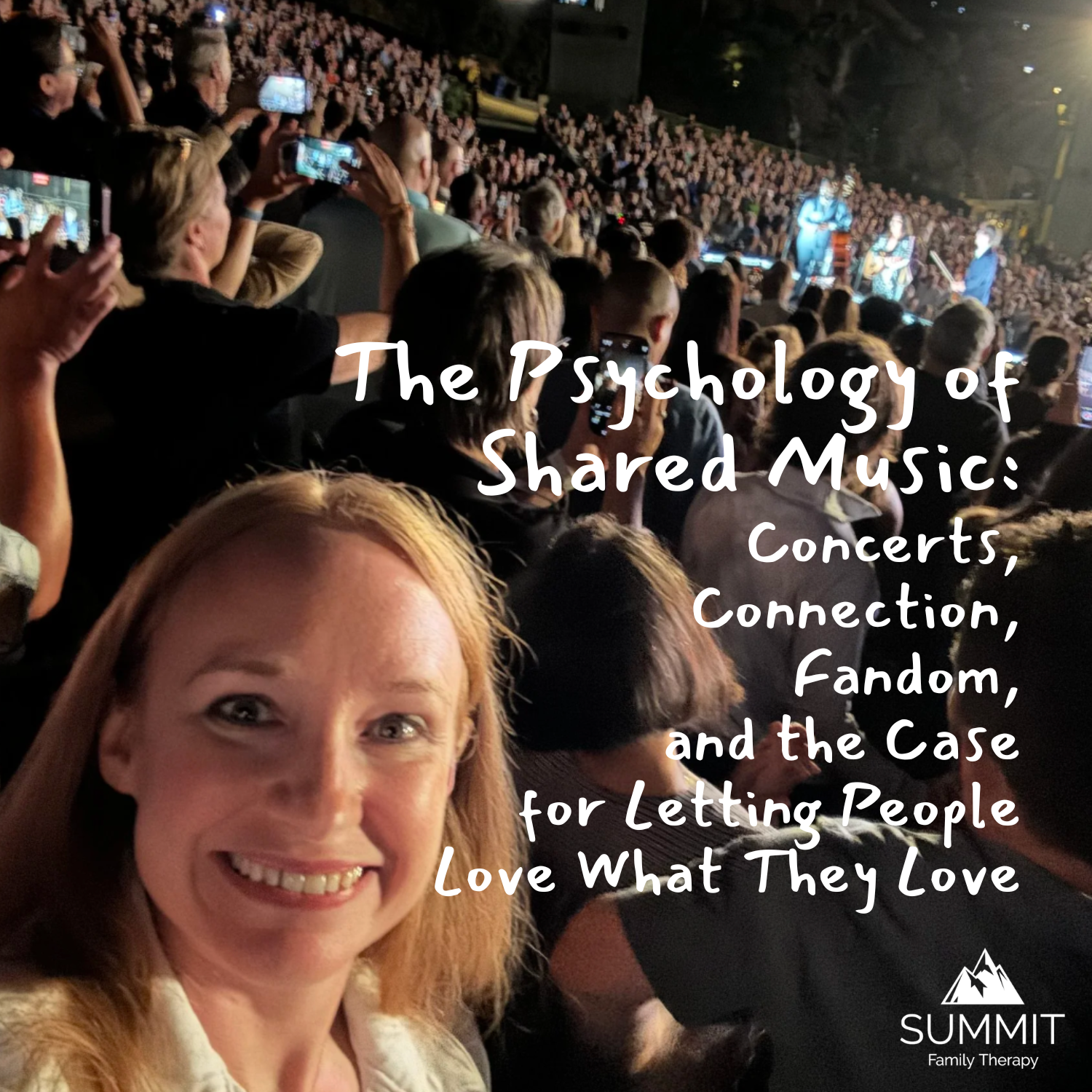
There is something profoundly human about gathering in a room full of strangers and feeling, even briefly, like you all belong to each other. Concerts are not just entertainment—they are emotional ecosystems.
As a therapist, I spend my days helping people regulate their nervous systems, repair attachment wounds, and reconnect with parts of themselves that have been silenced or forgotten. And increasingly, I find myself pointing to something deceptively simple as part of that healing process:
Go experience music with other people.

Rejection Sensitivity Dysphoria (RSD) describes an intense emotional reaction to perceived rejection, criticism, or judgment. While everyone experiences rejection sensitivity at times, RSD goes further—it becomes a dominant lens through which interactions, relationships, and even ambiguous communication are interpreted. On a recent episode of Summit Family Therapy’s 3 Pairs of Glasses Podcast, therapists explored how RSD impacts mental health, relationships, and daily functioning.
If you’ve ever found yourself asking, “Why do some people just naturally get it… and others don’t?”—you’re not alone. This question comes up in therapy rooms all the time. It lives in conversations about relationships, parenting, leadership, and even self-compassion. At its core is a deeply human curiosity: Is empathy something we’re born with, or something we can learn?

Memorial Day in Central Illinois often arrives with the things we’ve come to expect this time of year—parades in Peoria, backyard gatherings, kids running barefoot in the grass, and that subtle sense that summer is finally beginning. It’s a rhythm our community knows well. And yet, for many people, this day carries something much heavier beneath the surface.
If you have been around the therapy or child-development world for a while, you may have encountered terms like “anxious attachment” or “avoidant attachment.” Hearing these terms as a parent may cause worry. Is it possible that a child could get permanently set in a pattern? Or that you’ve done something wrong as a parent? Not necessarily! In this post, my goal is to unpack what these attachment styles look like, and what they can mean for your children.
If you’ve spent any time on TikTok or Instagram lately, you’ve likely seen a video that looks like this: a creator points to a list of "relatable" quirks—like losing your keys, liking coffee, having twenty browser tabs open, or my most recent favorite, showering backwards—and ends with the caption: “Did you know this was a sign of ADHD?”
There’s a particular kind of exhaustion that comes from trying to be everything to everyone—especially when your brain is wired to notice every misstep, replay every conversation, and quietly whisper, “You could have done that better.”
If you’ve ever felt that pull toward perfection—whether in parenting, relationships, or your work—you are not alone.

This article was inspired by a conversation with a client navigating something many parents silently carry this time of year.
Her child is graduating high school—but not onto a clearly defined, traditional path. There isn’t a polished answer to “What’s next?” There isn’t a neat, impressive narrative to offer at parties or in passing conversations.

For many people, a dog is more than a pet—they are a steady presence, a source of comfort, and a relationship that supports mental and emotional well‑being. While dogs are not a substitute for therapy or medication, research consistently shows that meaningful relationships with dogs can positively support mental health in ways that are both psychological and physiological.
At Summit Family Therapy, many of our clients describe a familiar and painful pattern: “I care deeply, I try so hard, and I still end up feeling small, blamed, or disposable in relationships.”
Often, Rejection Sensitive Dysphoria (RSD) is part of that story.
Not because something is wrong with you—but because your nervous system is doing exactly what it learned to do to protect you from loss of connection.

Mother’s Day is often wrapped in images of brunches, flowers, smiling families, and gratitude. For some, this day genuinely feels warm and celebratory. But for many others, Mother’s Day carries a quieter, more complicated emotional reality.

There’s a phrase I often share with parents: “Name it to tame it.”
It’s simple, accessible, and powerful.
When a child feels overwhelmed, angry, anxious, or frustrated, helping them put words to their internal experience can lower emotional intensity and support regulation. Naming emotions helps children feel seen and understood—and it gives their nervous system a chance to calm.

There’s a moment in many relationships that doesn’t look dramatic from the outside—but it’s no less real.
No slammed doors. No explosive arguments.
Just a quiet, persistent question that lingers beneath the surface:
Is this still right for me?

If you parent a teen or young adult, you’ve probably seen countless social media trends come and go. But there’s one gaining attention right now—not because it’s harmless or funny, but because of the very real mental health risks it carries.
It’s called looksmaxxing.

Perfectionism often looks admirable—especially in leadership.
It can look like being dependable, driven, detail‑oriented, and deeply committed to doing things “the right way.” Many of the clients we work with at Summit Family Therapy in Peoria, Illinois are high‑achieving professionals, caregivers, leaders, and helpers who pride themselves on responsibility and excellence.
And yet, many of them are also exhausted.

Many of us move through life with an internal rulebook that says: Do better. Be better. Don’t mess up. When we fall short—as all humans do—that inner voice can quickly turn harsh, critical, and shaming.
Self‑compassion invites a different way of relating to ourselves. It does not lower standards or excuse harmful behavior. Instead, it offers a supportive, grounded, and evidence‑based path for responding to our own suffering with the same care we would offer someone we love.
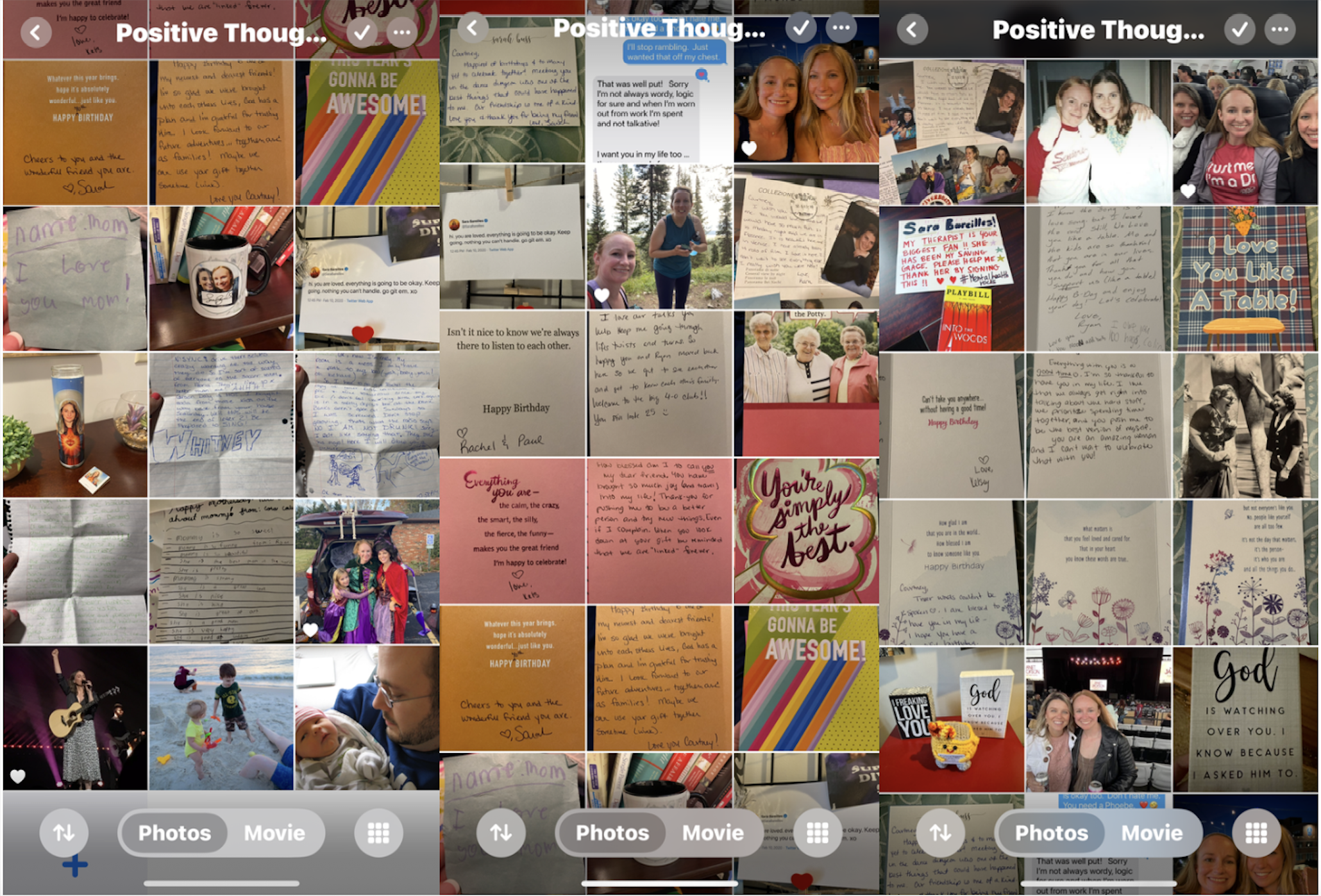
Why Does Everybody Hate Me? is a compassionate, validating, and deeply human exploration of Rejection Sensitive Dysphoria (RSD) by ADHD advocate Alex Partridge. Through personal stories, humor, and accessible psychoeducation, Partridge gives language to an experience many neurodivergent people live with silently—often wrapped in shame, confusion, and self‑doubt.
As a therapist, I was struck by how precisely this book reflects what I see clinically.
As someone living with RSD myself, it brought up a mix of anger, grief, relief, and recognition—sometimes all on the same page.

⚠️ Movie Spoiler Alert
This article contains spoilers for Project Hail Mary (2026) and Cast Away (2000).
Introduction: Two Very Different Stories, One Shared Human Need
Project Hail Mary and Cast Away take place in drastically different environments. One is set light‑years from Earth aboard a spacecraft. The other unfolds on a deserted island in the Pacific Ocean. But psychologically and emotionally, these films are telling the same story:
What happens to the human mind when connection is removed—and what changes when it returns?

A few weeks ago, a client said something that lingered with me long after our session ended:
“I’m not just grieving my marriage. I’m grieving how differently people are treating me now.”
They asked if I’d write about divorce—not the logistics, not the legal pieces, but the social and relational fallout. The judgment. The awkwardness. The friendships that suddenly feel fragile. The family members who ask too many questions. The people who quietly disappear.
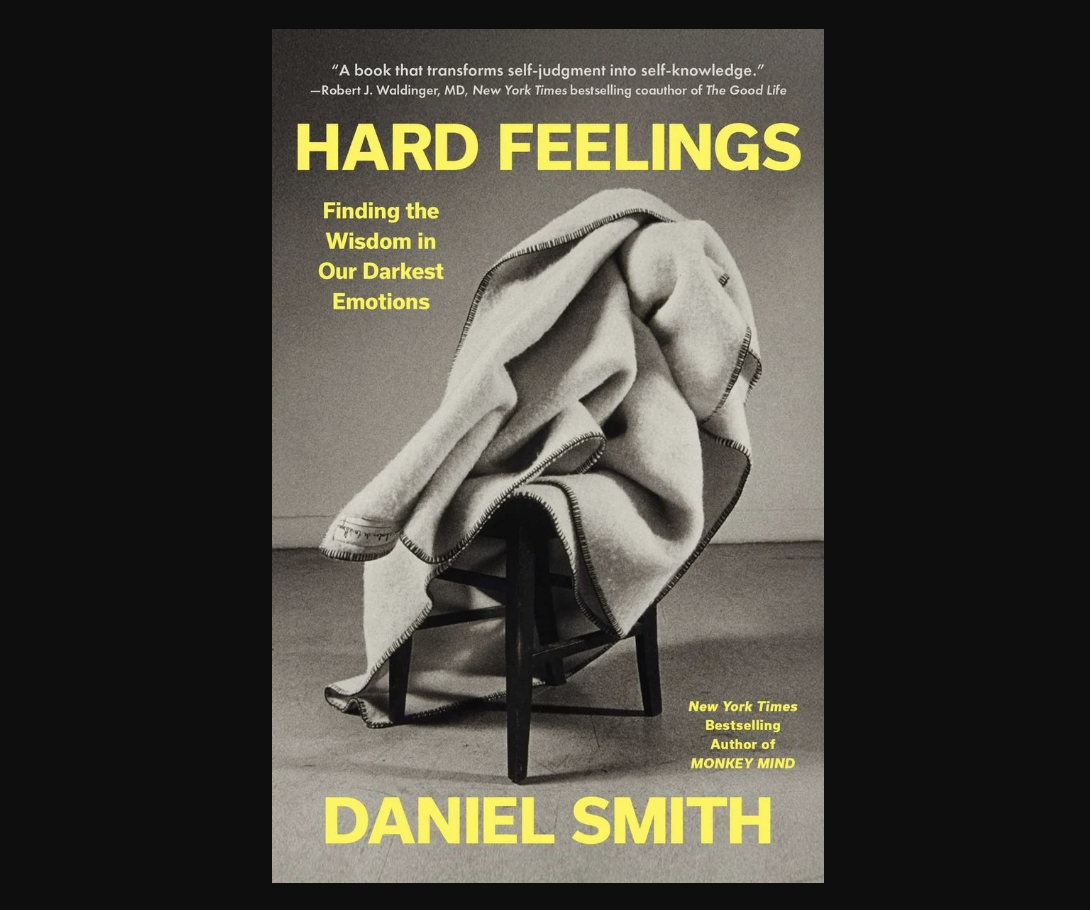
In his newest book, Hard Feelings: Finding the Wisdom in Our Darkest Emotions, psychotherapist and author Daniel Smith invites us to reconsider something most of us have spent years trying to avoid: our so‑called negative emotions. Rather than treating anger, shame, envy, regret, jealousy, annoyance, boredom, or despair as problems to eliminate, Smith makes a compelling and deeply humane case that these emotions serve an essential purpose—if we are willing to listen to what they are trying to tell us.
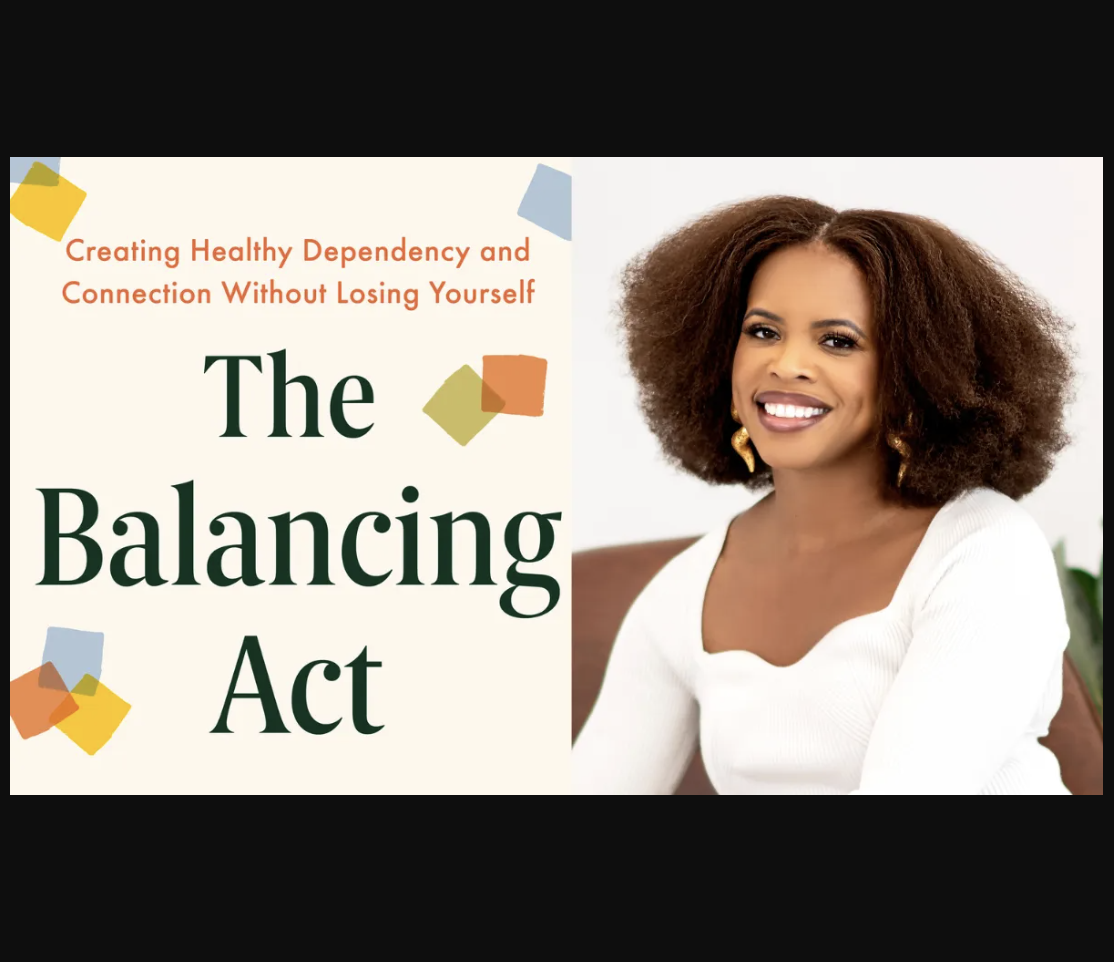
In her newest book, The Balancing Act: Creating Healthy Dependency and Connection Without Losing Yourself, licensed therapist and bestselling author Nedra Glover Tawwab explores a question many people quietly wrestle with: How do we stay connected to others without losing ourselves in the process?
As summer winds down, many families find themselves navigating a mix of excitement, anticipation, and anxiety. While social media often focuses on the new backpacks, fresh notebooks, and first-day photos, the transition back to school can be emotionally challenging for children and teens.