
Good Grief at Radio City
What Sara Bareilles taught me about holding grief and joy in the same hands
I realized recently that I haven't been very active on the blog, and there's a good reason for that: I've been busy living my best life.
Over the past three weeks, I had an experience that still feels a little unreal. By some miracle, I was able to see my favorite musician of all time, Sara Bareilles, three weekends in a row. Not only did I get tickets to see her in New York, Chicago, and St. Louis, but I also somehow convinced three different adult friends with jobs, responsibilities, and actual lives to join me, one concert at a time.
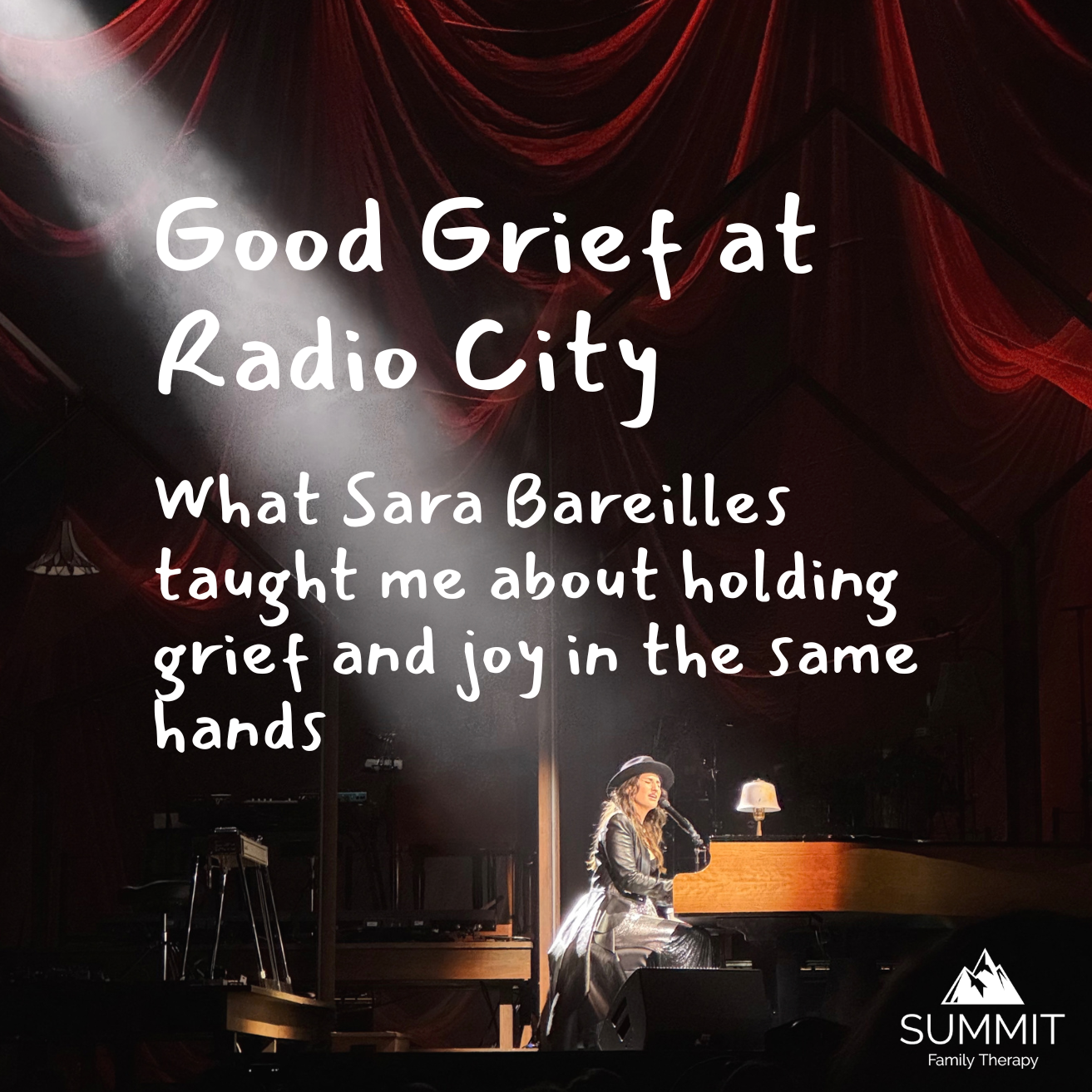
Sara Bareilles at Radio City Music Hall, New York, September 18, 2026
The fact that all of those logistics came together feels nothing short of miraculous. The tickets, the travel, the schedules, and the willingness of friends to share in something they knew meant so much to me all aligned perfectly.
I thought I would make my first blog post about the New York concert.
I was fortunate enough to see Sara Bareilles at Radio City Music Hall, a venue that had somehow eluded me despite several previous trips to New York City. I'd walked by it, admired its history, and seen countless photos, but this was my first time actually stepping inside.
The theater itself is remarkable. Large enough to create the excitement and energy of a major concert, yet intimate enough to feel connected to the artist on stage, Radio City strikes a balance that few venues can achieve. There is something deeply nostalgic about the space. It feels like a place where stories have been told for decades, and that sense of history seemed to fit perfectly with the evening that unfolded.
Before I go any further, this is my official spoiler alert. If you're planning to attend one of her upcoming concerts and want to experience everything for the first time yourself, you may want to stop reading now.
What struck me most throughout the evening was how beautifully her newest album, Good Grief, captures the complexity of being human. The album explores loss in many forms, from the grief of losing friends to the heartbreak of infertility and other deeply personal struggles. Sara has always had a gift for writing honestly, and this album may be one of her most vulnerable yet.
But here's what I found so remarkable: despite the heaviness of some of the themes, the concert never felt depressing.
There were moments that brought tears to my eyes. There were songs that invited reflection, sadness, and remembrance. Yet those moments were intentionally woven together with humor, hope, gratitude, and joy. Just when you found yourself sitting with something difficult, she would gently guide the audience somewhere lighter. Then, when everyone was comfortable and laughing, she'd invite us back into deeper waters.
At one point during the concert, I turned to my friend, whom I've known since junior high and who had traveled from St. Louis to attend the New York show with me, and said, "This whole concert is trauma-informed."
That may sound like a strange observation to make in the middle of a concert, but as a therapist, it was impossible not to notice.
The pacing felt incredibly intentional.
The experience reminded me of how we approach difficult emotions in therapy. You don't simply throw people into the deepest parts of their grief and leave them there. You move between activation and regulation. You help people access painful emotions, then reconnect with safety, joy, humor, movement, and hope. You create an experience that allows people to feel without becoming overwhelmed.
That's exactly what this concert felt like.
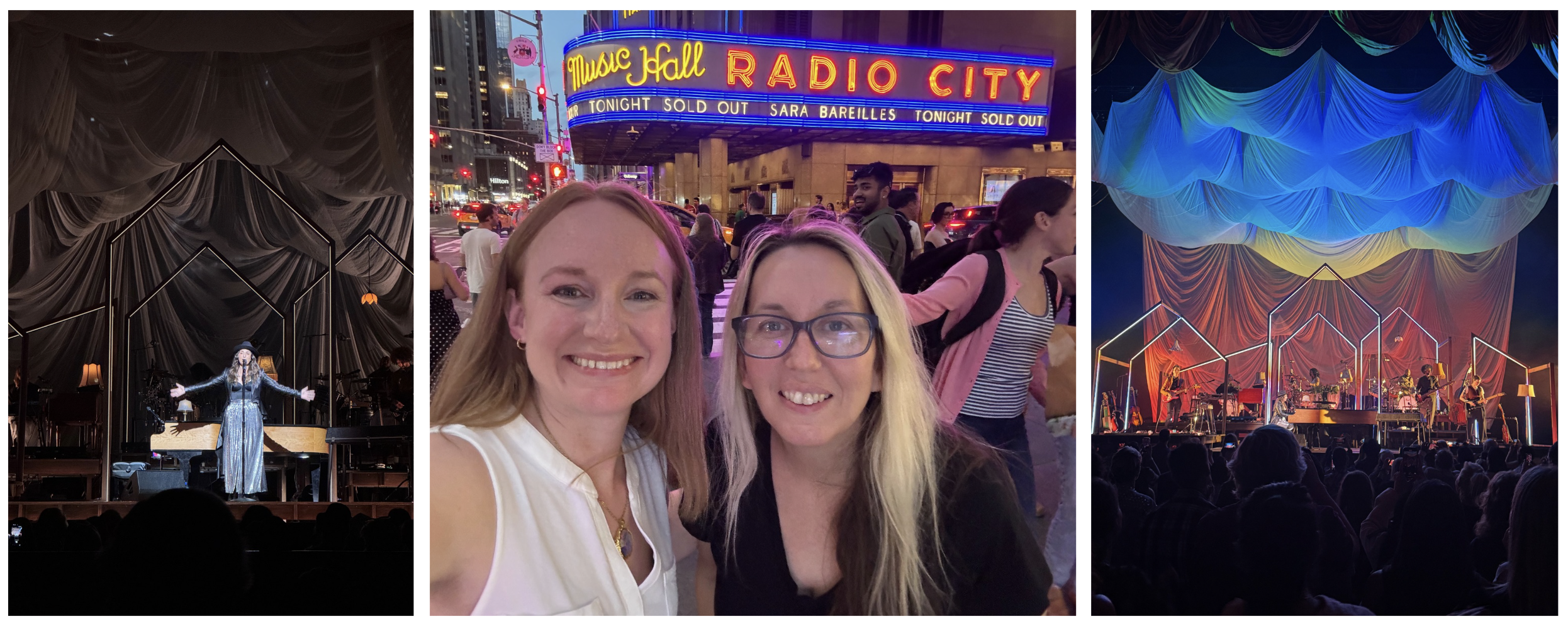
Sara Bareilles at Radio City Music Hall, New York, September 18, 2026
One of the clearest examples was when Sara launched into a cover of Whitney Houston's "I Wanna Dance with Somebody."
The placement of that song felt brilliant.
The audience had spent considerable time reflecting, feeling, and sitting with the emotional weight of several songs. Then suddenly the familiar opening notes began, and thousands of people sprang to their feet.
For a few minutes, nobody was processing grief. Nobody was analyzing lyrics. Nobody was reflecting on loss.
We were just dancing.
Strangers were smiling at each other. Friends were singing at the top of their lungs. People who had been quietly wiping away tears moments earlier were laughing and moving. It created a physical release that felt almost therapeutic.
As therapists, we talk about how healing doesn't happen through words alone. Sometimes people need movement. They need connection. They need moments of pleasure and joy. They need reminders that life still contains beauty.
That song served exactly that purpose.
The concert wasn't asking us to ignore grief. It was reminding us that grief exists alongside joy.
The entire evening seemed built around that principle.
There was space for sadness.
There was space for laughter.
There was space for stories.
There was space to remember.
There was space to dance.
Most importantly, there was space for all of those things to exist together.
Why the Dancing Mattered: Music, Movement, and the Nervous System
As I reflected on that moment when thousands of people jumped to their feet to sing and dance to I Wanna Dance with Somebody, I couldn't help but think about what was happening beyond the entertainment.
As a therapist, I spend a lot of time talking about nervous system regulation. Most people think regulation only happens through deep breathing, meditation, or sitting quietly. While those can certainly help, humans have been regulating their nervous systems through music, rhythm, movement, singing, and community long before therapy offices ever existed.
Research suggests that both listening to music and actively making music can influence the autonomic nervous system, the system responsible for shifting us between states of stress, danger, rest, and connection. Music has been shown to affect heart rate, breathing patterns, and the balance between sympathetic activation and parasympathetic calming responses.
What struck me about Sara's concert was that she seemed to intuitively understand this process.
She invited the audience into deep emotional experiences through songs about grief, loss, infertility, and change. Then, before the weight became overwhelming, she brought us back into our bodies through laughter, storytelling, movement, and connection.
That transition into Whitney Houston's I Wanna Dance with Somebody felt like more than a fun cover song.
It felt like regulation.
The audience wasn't being pulled away from grief. We were being reminded that joy still exists alongside it.
Everyone was standing. Moving. Singing. Smiling at strangers. Sharing an experience with thousands of other people. For a few minutes, our bodies were doing something that therapists often encourage clients to do: reconnecting with safety, connection, and aliveness.
Emerging research grounded in Polyvagal Theory suggests that activities such as rhythmic movement, breathing together, and singing can support feelings of safety and social connection while promoting healthier autonomic regulation. Group singing, in particular, has been associated with improvements in emotional well-being and social engagement.
In other words, there is a reason it feels good to sing at the top of your lungs with thousands of other people.
Your body is participating in the experience, not just your mind.
A Few Simple Nervous System Regulation Ideas
The concert also reminded me that regulation doesn't always have to be complicated. Some of the best tools are surprisingly ordinary:
Put on a favorite song and sing along, even if you're off-key.
Dance in your kitchen while making dinner.
Take a walk while listening to music that matches the emotional state you want to move toward.
Attend a concert, worship service, choir rehearsal, or community event where people sing together.
Create playlists for different needs: calming, energizing, grieving, celebrating, or remembering.
When you're feeling overwhelmed, try gentle movement before asking yourself to think differently.
Sometimes the goal isn't to talk yourself out of an emotion.
Sometimes the goal is simply to help your body remember that it is safe enough to feel it.
That's what I experienced that night at Radio City Music Hall.
Not an escape from grief.
A reminder that grief and joy can dance together.
The more I reflect on the evening, the more I realize that Good Grief isn't really an album about sadness at all. It's an album about being fully alive. It's about making room for heartbreak and hope, loss and gratitude, tears and laughter, all at the same table.
By the end of the night, I didn't leave feeling drained by the emotional moments. I left feeling fuller because of them.
In a world that often demands that we choose between acknowledging pain and embracing joy, Sara Bareilles offered a different invitation. She reminded us that the richest life is not one without suffering. It's one where we learn to hold grief and joy in the same hands.
For three beautiful hours at Radio City Music Hall, that's exactly what she helped thousands of people do.
And I feel incredibly grateful that I got to be one of them.
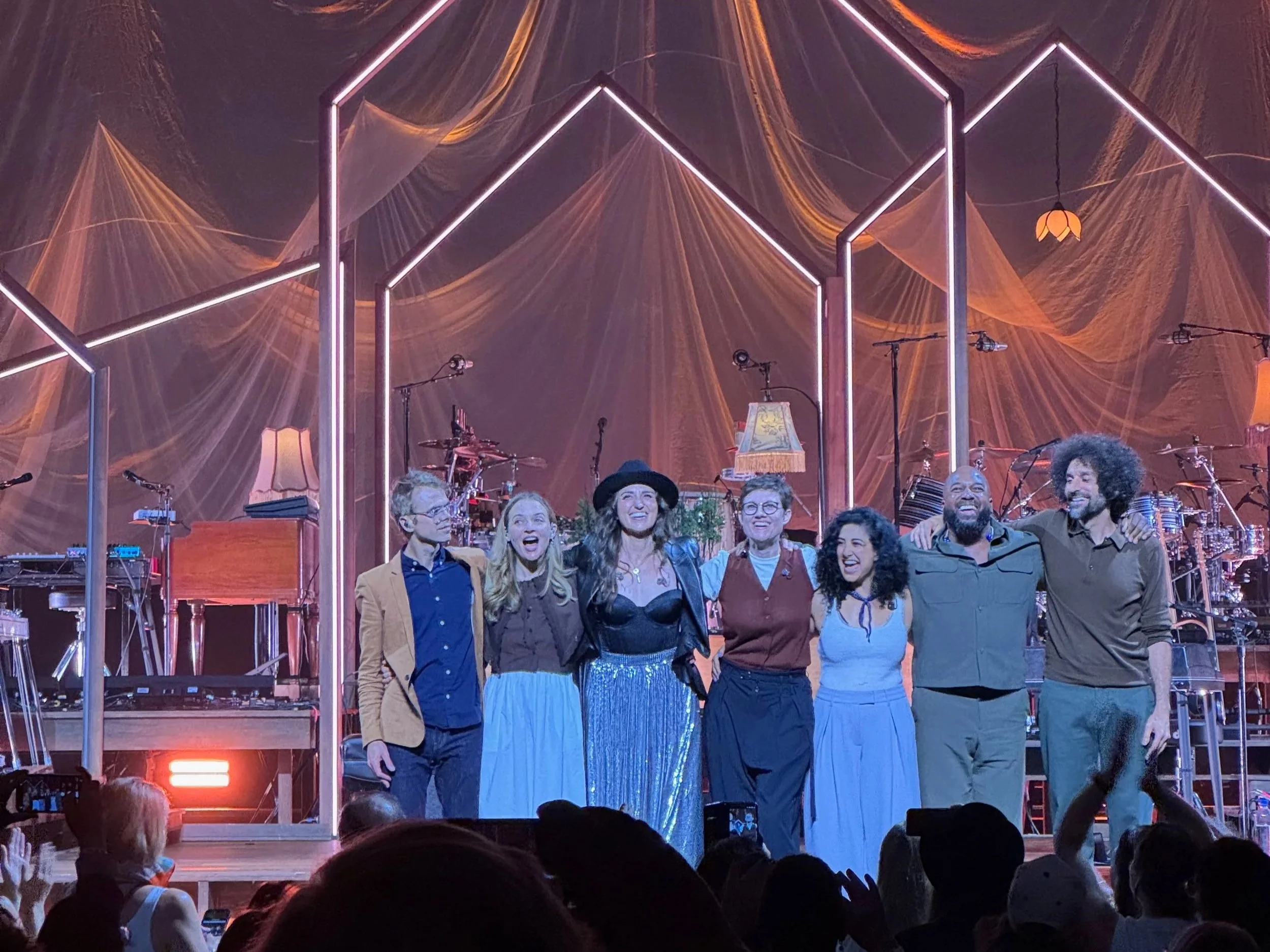
Sara Bareilles at Radio City Music Hall, New York, September 18, 2026
References
McCrary, J. M., & Altenmüller, E. (2021). Mechanisms of Music Impact: Autonomic Tone and the Physical Activity Roadmap to Advancing Understanding and Evidence-Based Policy. Frontiers in Psychology.
Ellis, R. J., Koenig, J., & Thayer, J. F. (2012). Getting to the Heart: Autonomic Nervous System Function in the Context of Evidence-Based Music Therapy. Music and Medicine.
Fox, E. (2025). Polyvagal Theory in Trauma-Informed Music Therapy Practice. Music Therapy Perspectives.
Wünnenberg, E., & Baumann, N. (2025). Group Singing Through the Lens of Polyvagal Theory. PLOS ONE.