
The Psychology of Shared Music: Concerts, Connection, Fandom, and the Case for Letting People Love What They Love
There is something profoundly human about gathering in a room full of strangers and feeling, even briefly, like you all belong to each other. Concerts are not just entertainment—they are emotional ecosystems.
As a therapist, I spend my days helping people regulate their nervous systems, repair attachment wounds, and reconnect with parts of themselves that have been silenced or forgotten. And increasingly, I find myself pointing to something deceptively simple as part of that healing process:
Go experience music with other people.
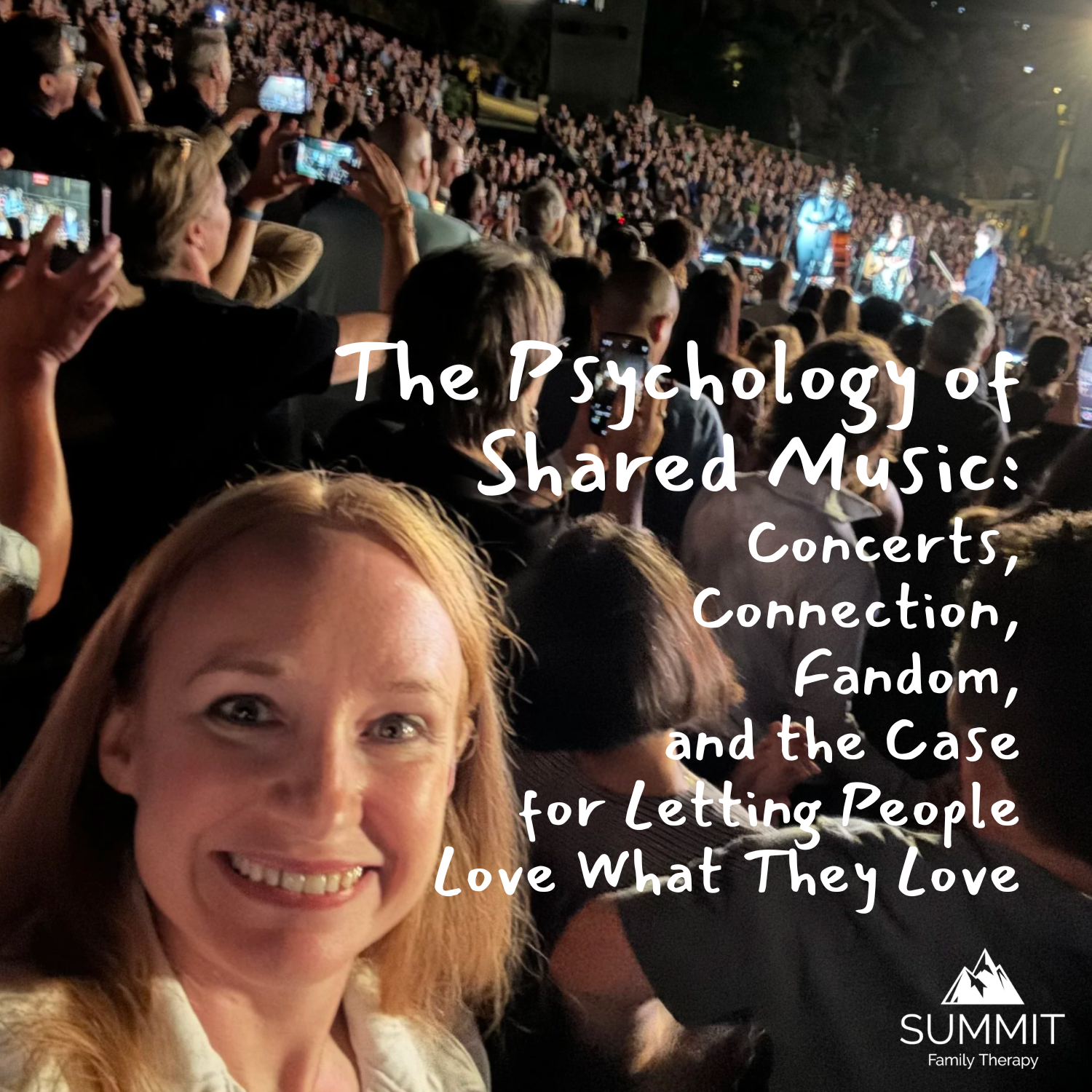
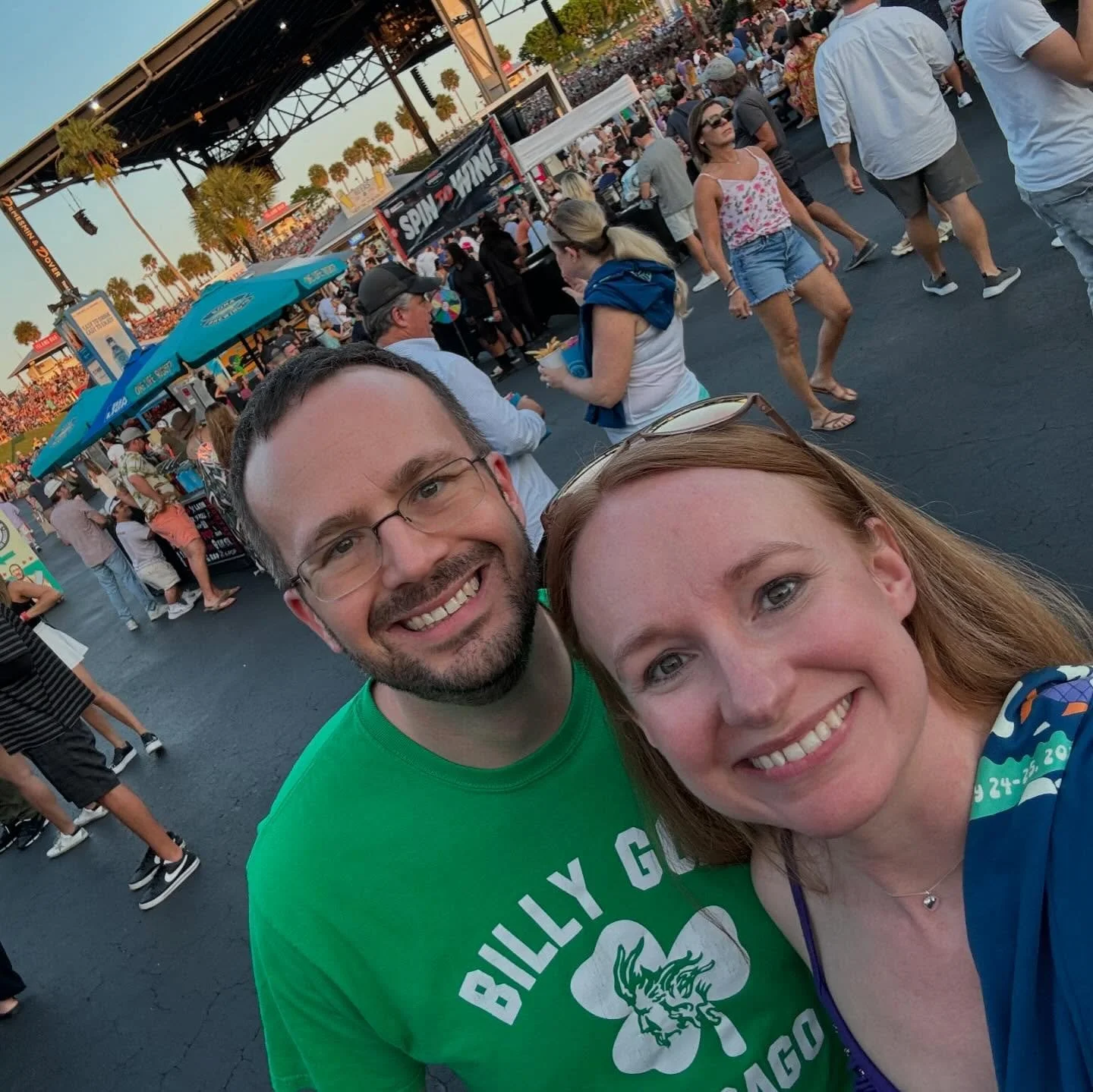
My face of pure joy watching Sara Bareilles at the Hollywood Bowl!
The Mental Health Benefits of Concert Attendance
1. Social Connection and Belonging
A robust body of research confirms that social connection is foundational to mental health. Live events—including concerts—offer a unique environment that facilitates both bonding with close others and meaningful connection with strangers.
Unlike many structured social interactions, concerts create a shared emotional experience where participants are synchronized in attention, movement, and affect. This phenomenon, often referred to as “collective effervescence,” produces a sense of unity and transcendence that contributes to lasting well-being.
In simple terms:
We feel less alone because, for a moment, we are literally in it together.
2. Emotional Regulation and Stress Reduction
Music engagement—especially in live settings—has been shown to reduce anxiety, improve mood, and enhance emotional well-being.
Research also indicates that listening to music in group settings can decrease stress hormones such as cortisol, offering measurable physiological relief.
Additionally, shared music experiences stimulate neurochemical processes associated with bonding and safety, including the release of oxytocin—the hormone linked to trust and connection.
For many individuals, especially those navigating chronic stress or trauma, concerts function as a nervous-system reset—accessible, embodied, and deeply regulating.
3. Identity Formation and Meaning-Making
Music does not simply accompany our lives—it organizes them.
Research suggests that engagement with music contributes to identity development, mood regulation, and meaning-making processes across the lifespan.
Songs become markers of time. Lyrics give language to experiences we may not yet fully understand. Albums hold entire seasons of our lives.
The Psychology of Fandom: When Loving Something Is Good for You
Reframing “Obsession” as Connection
The term “obsession” is often used pejoratively, particularly when describing fans—especially women—who express deep affection for artists or creative work.
However, contemporary psychological research offers a more nuanced perspective.
Most fans exist within what researchers describe as the “entertainment-social” or “intense-personal” range, both of which are considered normative and often beneficial. Only extreme, boundary-violating behaviors fall into clinically concerning categories.
Fandom, in its healthy form, provides:
Belonging and community
Identity scaffolding
Emotional expression and validation
Motivation and inspiration
In fact, parasocial relationships—those one-sided emotional connections to public figures—can serve as “valuable social resources” that reduce loneliness and provide comfort.
These bonds are not inherently pathological. They are human.
Fandom as Social Identity
Fandoms operate as communities, shaped by shared values, language, and rituals. Participation in these communities contributes to social identity and self-concept.
For individuals who have felt marginalized, misunderstood, or isolated, fandom can become a space of recognition:
A place where you don’t have to explain why it matters—because everyone already knows.
Why We Should Stop Shaming People for Loving What They Love
Despite the evidence supporting the benefits of fandom, cultural narratives continue to dismiss or ridicule people—especially women and adolescents—for their enthusiasm toward artists or bands.
This is not benign.
Research consistently demonstrates that belonging is a core psychological need. Disrupting or dismissing a source of belonging can have real emotional consequences.
Moreover, fandom communities are often described as supportive environments that allow individuals to express themselves, develop skills, and experience social connection.
When we shame someone for loving something that causes no harm, we are not correcting behavior—we are invalidating joy, identity, and connection.
In some cases, we are reinforcing the very isolation we claim to be concerned about.
A Personal Reflection: On Being a “Super Fan”
As both a clinician and a human being, I would be remiss not to acknowledge my own place in this conversation.
I am, without hesitation, a Sara Bareilles super fan.
Her music has been woven through the fabric of my life for years. Each album represents a different season—different versions of myself, different thresholds of growth, different moments of grief and becoming.
There are songs that held me when words failed.
Songs that gave me courage when I needed to speak.
Songs that reminded me who I was when I felt disconnected from myself.
My only tattoo is a song title—written in Sara Bareilles’ own handwriting.
That is not incidental.
That is integration.
From a clinical lens, this is a clear example of how music can function as a relational anchor—a consistent, meaningful thread woven through shifting life experiences.
From a human lens, it’s simply this:
Her work has mattered to me.
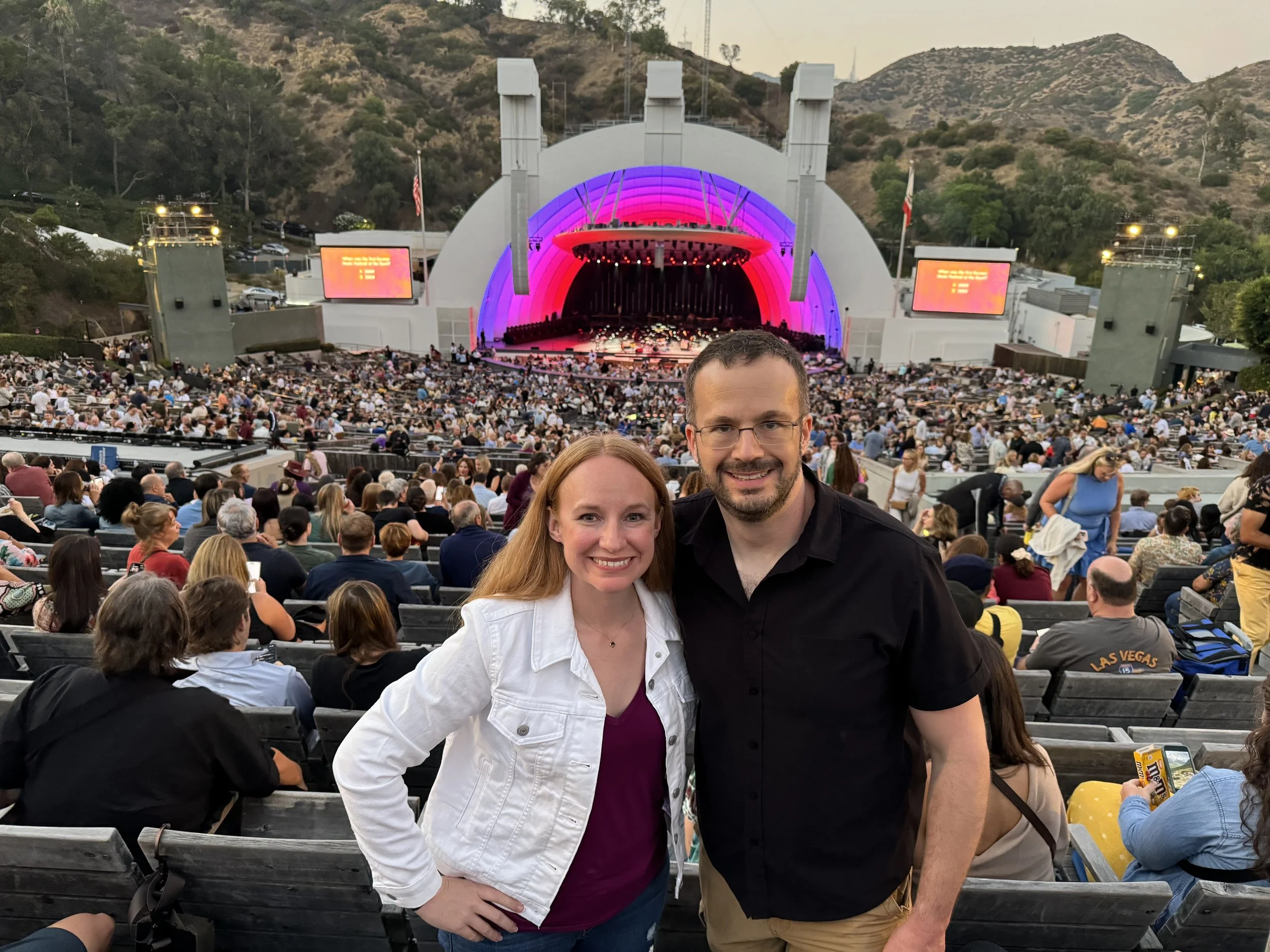
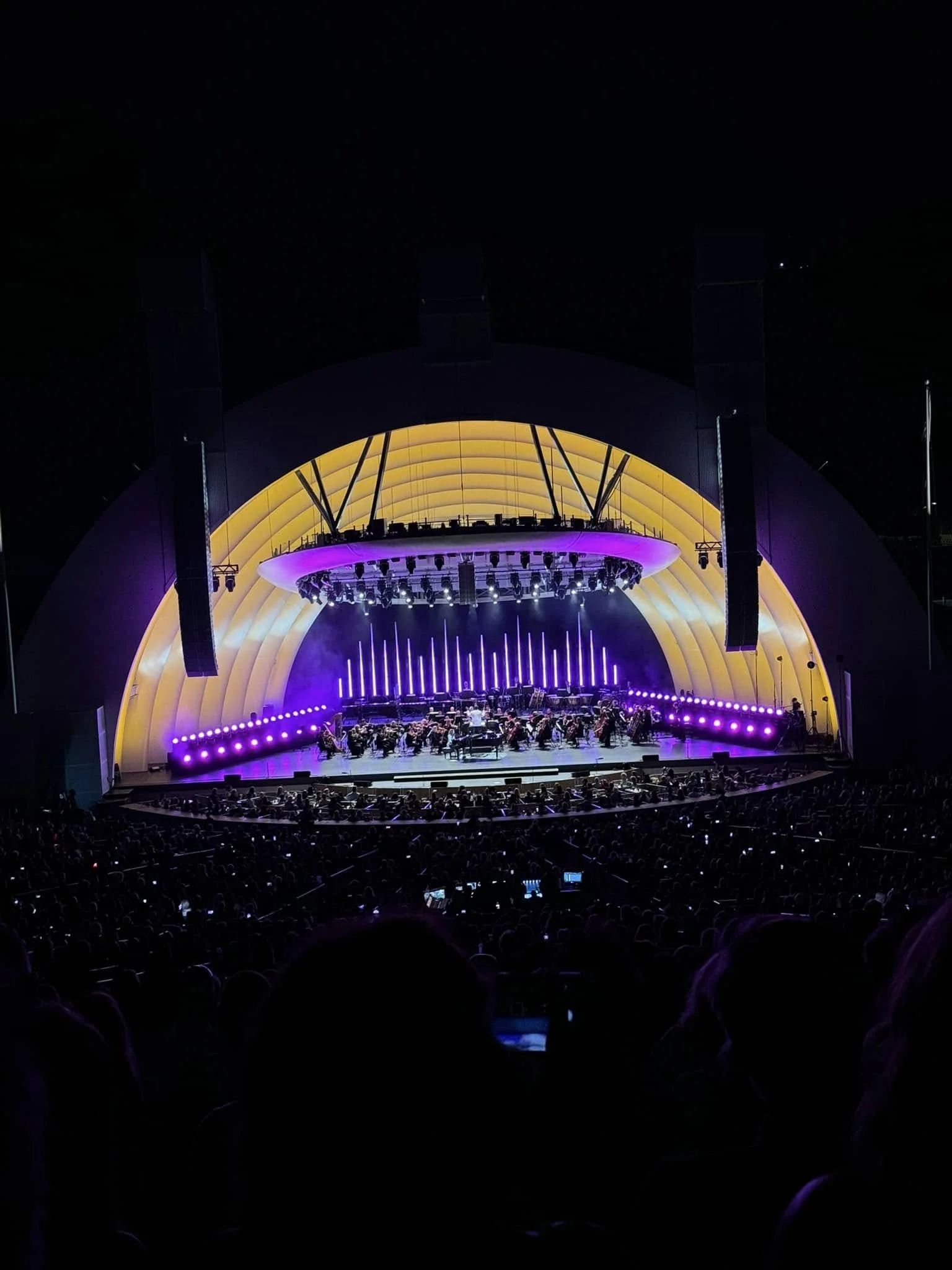
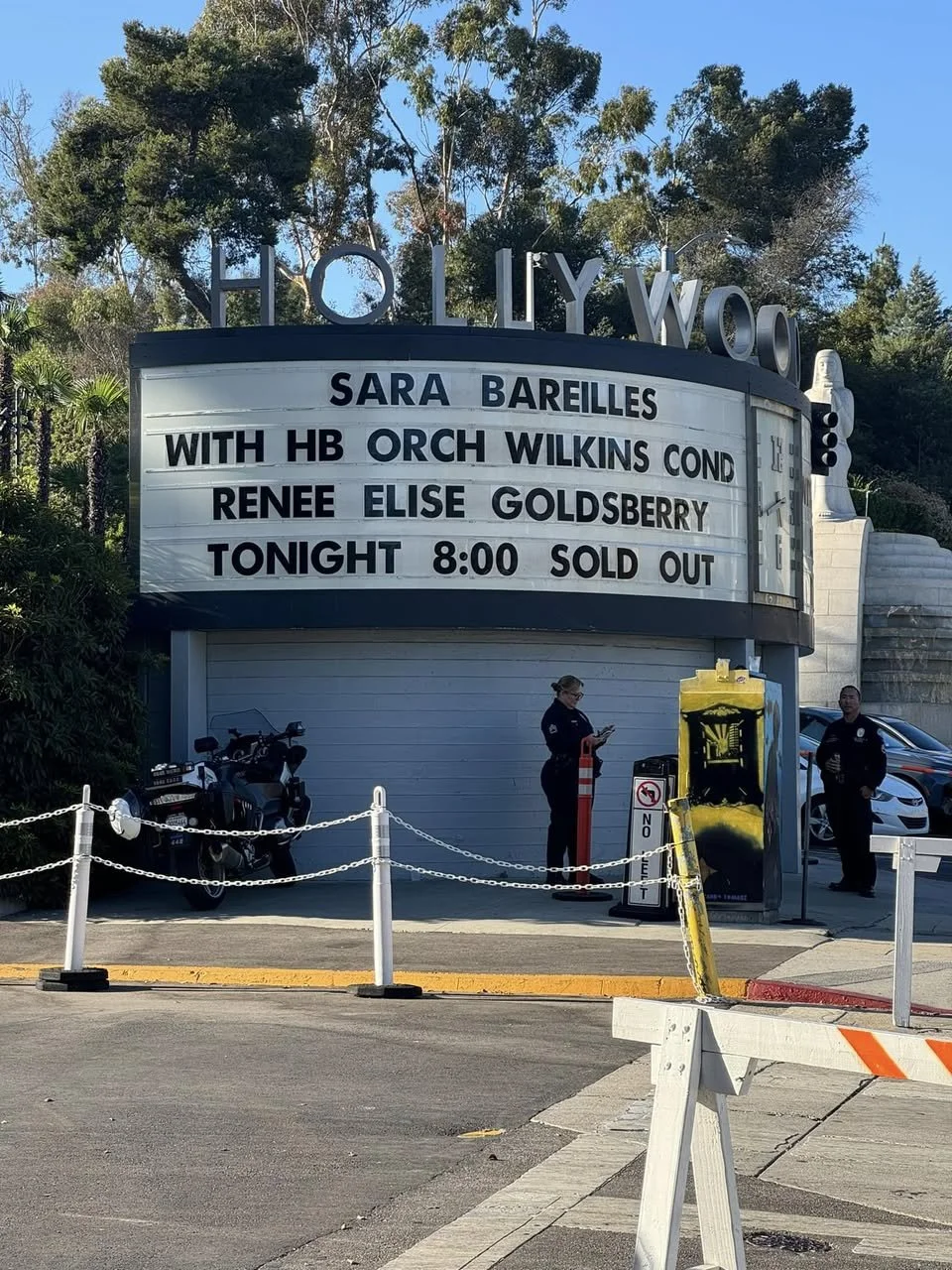
A few years ago, I attended a Sara Bareilles concert at the iconic Hollywood Bowl, and what unfolded that evening was a near-perfect example of what research describes as collective effervescence—that sense of unity, emotional synchronization, and belonging that emerges in shared musical spaces.
From the moment we arrived, the experience was relational.
We spread out a picnic—sushi, charcuterie, a bottle of wine—settling into a setting that felt both intimate and expansive, surrounded by the unmistakable magic of a California evening. The weather was perfect. The atmosphere was alive. The Bowl itself—layered in history and meaning—felt like a sacred space for connection.
And then something subtle but profound happened.
I felt instantly connected to the strangers sitting around us.
No introductions necessary. No background context. No social posturing. Just a shared understanding: we are here because this matters to us.
This is the psychology of concerts in real time—barriers drop, and what remains is a shared emotional language.
The Experience of Shared Meaning
The evening opened with Renée Elise Goldsberry—known to many as Angelica from Hamilton—whose performance set the tone for what would become an emotionally expansive night.
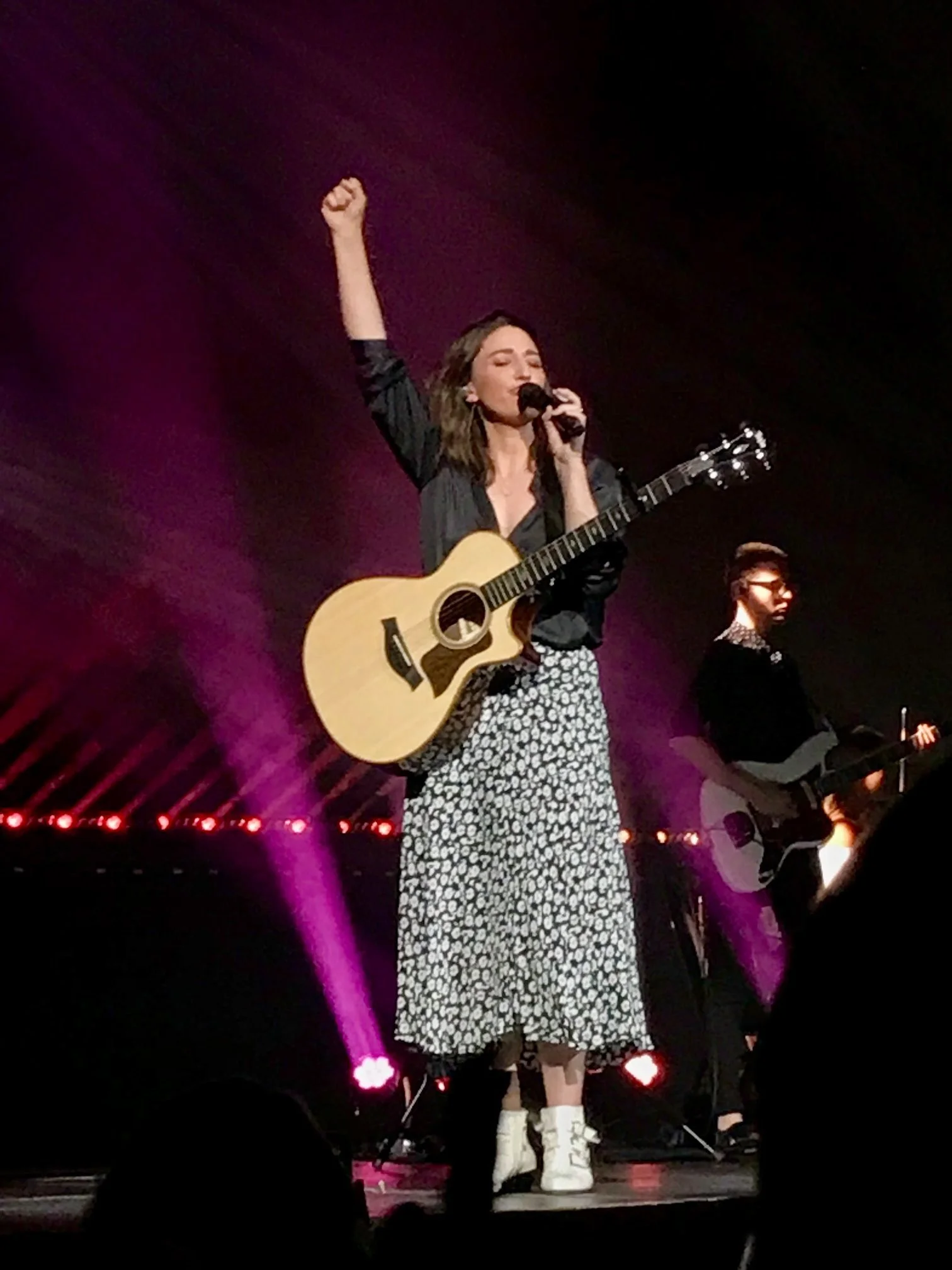
Then, Sara took the stage.
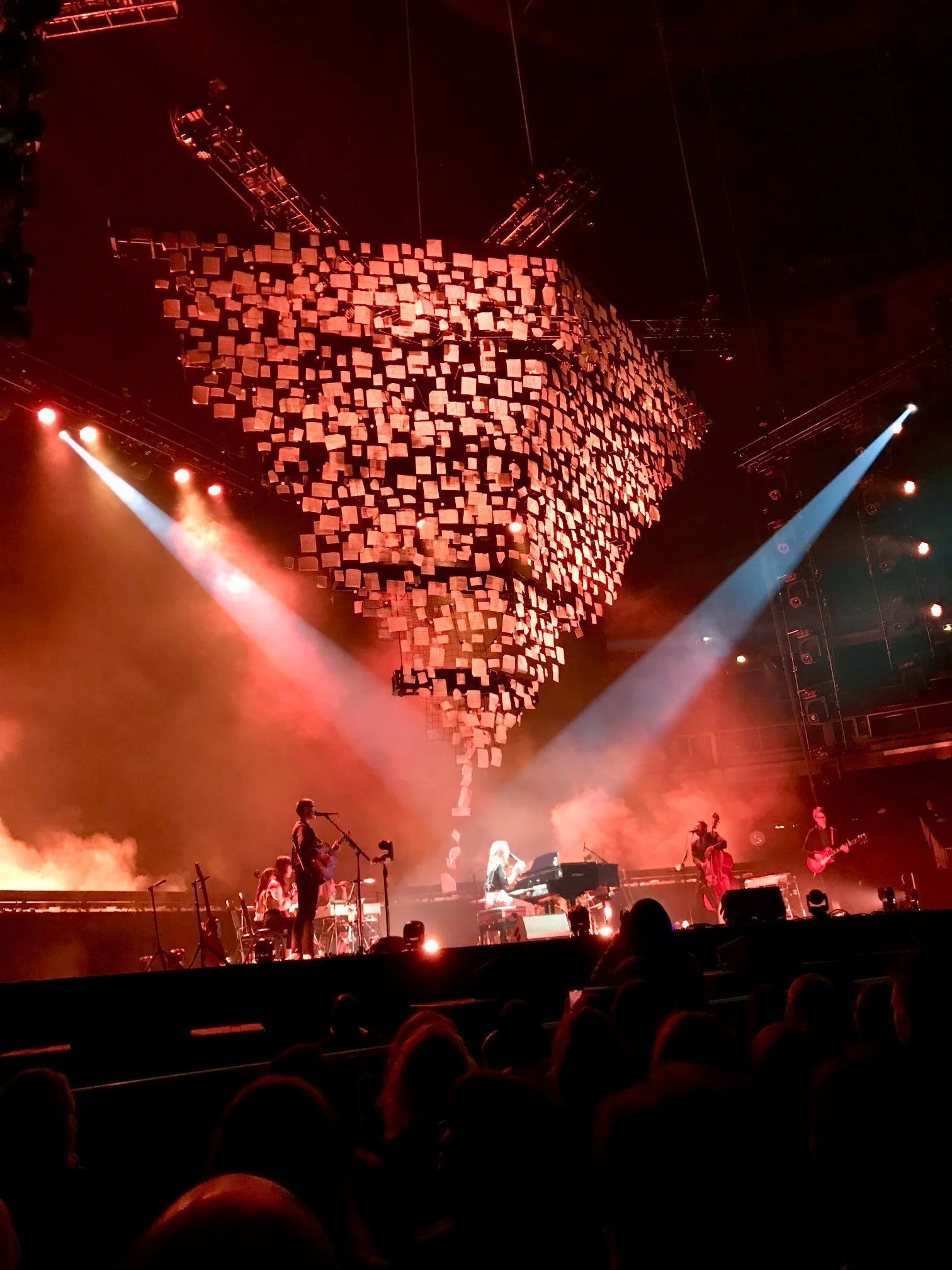
She moved seamlessly between beloved songs and selections from her work in musical theater—reminding us that music is not only entertainment, but storytelling, identity-building, and creative expression all at once.
At one point, she debuted two new songs, including one from the upcoming musical The Interestings, which premiers this January. There is something uniquely powerful about witnessing art in its becoming—it invites the audience into the creative process, deepening both connection and meaning.
Midway through the show, she transitioned off the stage and into the audience—performing just a short distance away from where we sat. In that moment, the boundary between artist and audience dissolved. It became less about performance and more about presence.
Emotion, Regulation, and Permission
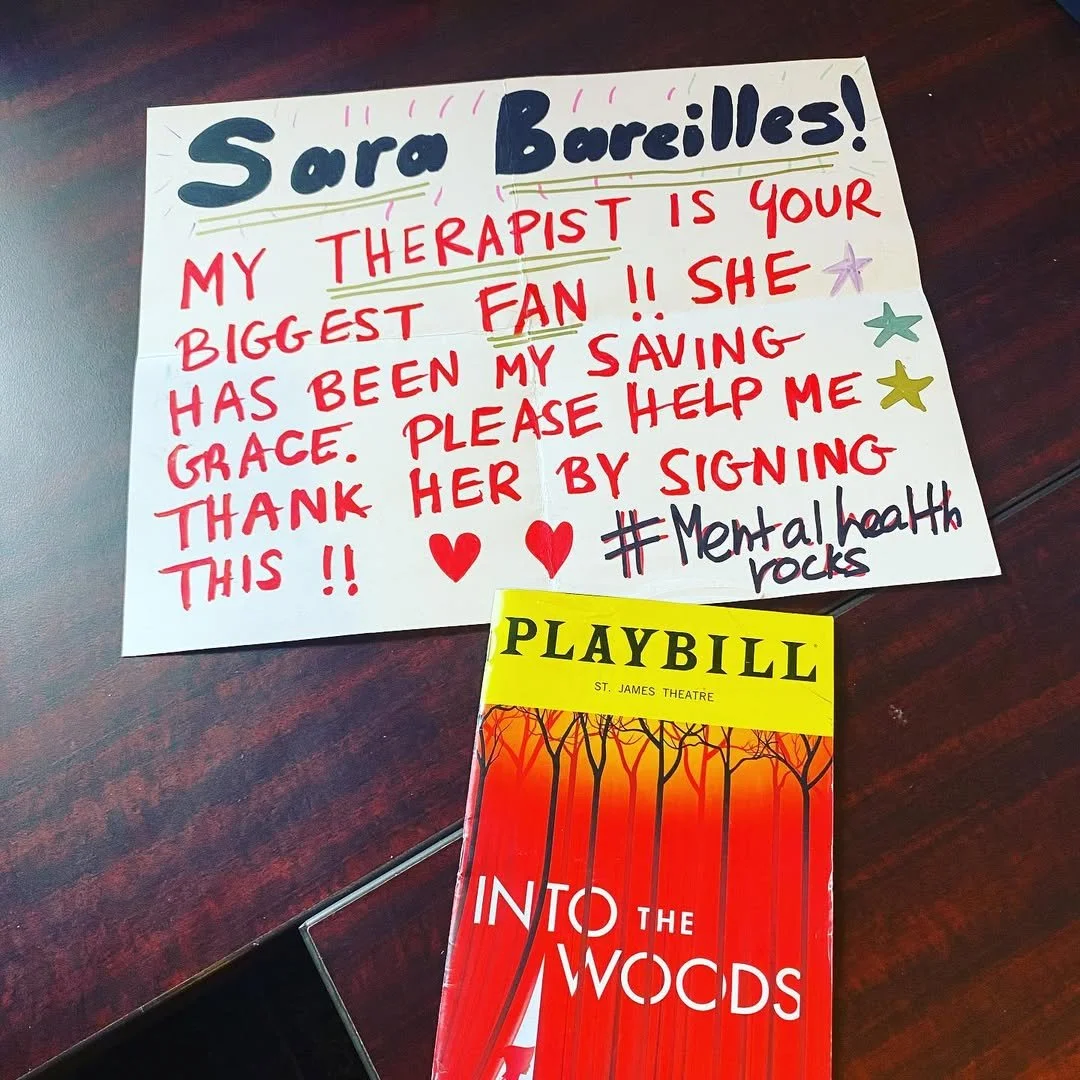
I had not seen Sara Bareilles perform live since 2019, though I’ve had the privilege of seeing her perform in Waitress and Into the Woods in New York City.
And yet, this experience was different.
More personal.
More emotional.
More integrated.
For a significant portion of the show, I found myself crying—freely, openly.
Not just out of sadness. Not just out of joy.
But both.
This is something I emphasize often in clinical practice:
All feelings are valid—and often, they coexist.
Live music creates a space where emotional expression is not only permitted, but normalized. You don’t have to explain why a song matters. You don’t have to justify your emotional response.
You just get to feel it.
Music as a Lifeline Across Time
When I say that Sara Bareilles’ music has “saved me,” I do not mean that metaphorically.
Her music has accompanied me through multiple chapters of my life—grief, growth, identity shifts, moments of quiet resilience and profound transformation. Each album holds a story. Each song carries emotional data that has helped me process experiences I did not yet have language for.
This is consistent with what we know clinically:
Music becomes an emotional container, a regulation tool, and a continuity anchor for identity.
It links who we were, who we are, and who we are becoming.
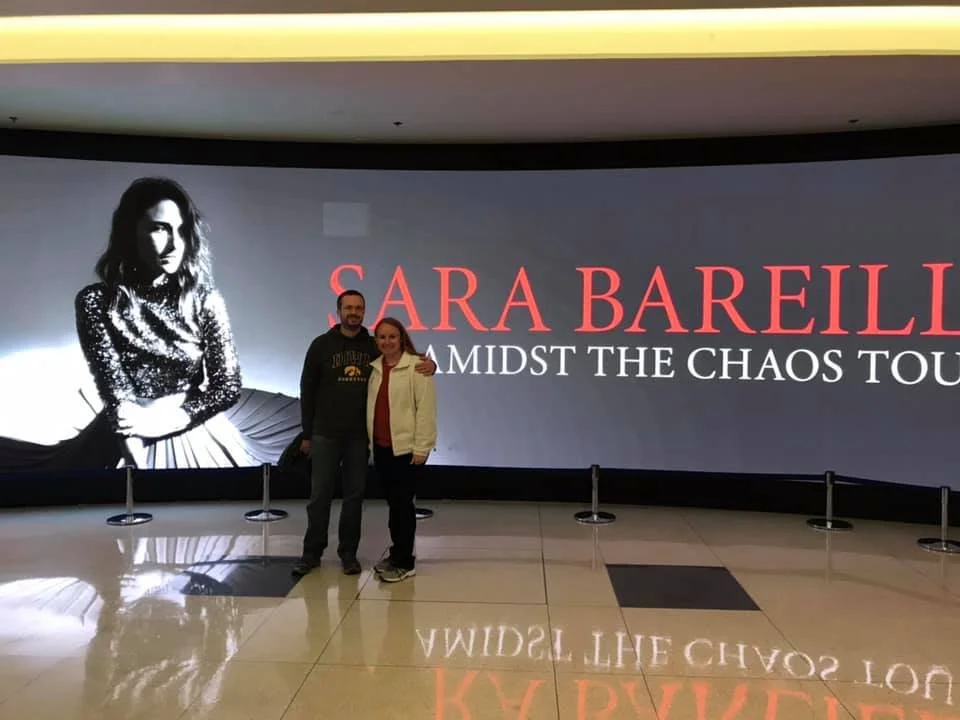
Clinical Implications
For therapists, educators, and caregivers, the implications are clear:
Encourage shared music experiences as a form of relational connection
Validate fandom as a legitimate source of meaning and identity
Assess for balance rather than intensity when evaluating fan engagement
Challenge internalized shame around passion, joy, and enthusiasm
And perhaps most importantly:
Recognize that what may appear trivial from the outside often carries deep psychological significance on the inside.
Conclusion
We live in a culture that often encourages detachment while quietly longing for connection.
Concerts offer connection.
Music offers regulation.
Fandom offers belonging.
And joy—unapologetic, enthusiastic joy—is not something we should be teaching people to suppress.
If something is meaningful, life-giving, and causes no harm, we do not need to pathologize it.
We may, in fact, need more of it.
And if you ever find me in a crowd, singing every word of a Sara Bareilles song with complete emotional commitment—know that from both a clinical and personal perspective…
I’m exactly where I’m supposed to be.
References
Becker, A. S., et al. (2026). Musician presence and its effects on physiological and psychological well-being in live versus livestreamed concerts. Scientific Reports.
Brenner, B. (2025). The psychology of parasocial relationships: From fandom to healthy boundaries. Therapy Group DC.
Dingle, G. A., et al. (2021). How do music activities affect health and well-being? A scoping review. Frontiers in Psychology, 12.
Godman, H. (2024). Do parasocial relationships fill a loneliness gap? Harvard Health Publishing.
Wiedeck, C. (2025). 14 surprising health benefits of attending concerts. Festivaltopia.
Jackson, M. M., & Thompson, A. (2024). Psychological impacts of fandom culture. Ohio State University analysis.