

Supporting Your Anxious Child: What Research Suggests Parents Can Do to Help
If you’re parenting an anxious child, you’ve probably asked yourself some version of this question:
Am I helping… or am I making it worse?
I’ve asked it, too—often in the middle of the night, sitting beside my anxious child as worries spill out. School. Friendships. Separation. Sleep. All the endless “what ifs.” Every instinct in me wants to make the fear disappear. I reassure. I explain. I adjust plans. I tiptoe. I problem‑solve.
If you’re parenting an anxious child, you’ve probably asked yourself some version of this question:
Am I helping… or am I making it worse?
I’ve asked it, too—often in the middle of the night, sitting beside my anxious child as worries spill out. School. Friendships. Separation. Sleep. All the endless “what ifs.” Every instinct in me wants to make the fear disappear. I reassure. I explain. I adjust plans. I tiptoe. I problem‑solve.
And sometimes, despite all that love and effort, the anxiety gets louder instead of quieter.
If that sounds familiar, you’re not alone.

As both a family therapist and a parent of an anxious child, I want to say this clearly: your child’s anxiety is not a sign that you’re failing. Supporting an anxious child does not mean eliminating fear. The real work—hard, slow, imperfect work—is helping our children learn that they can live with fear and still move forward.
Decades of research on childhood anxiety point to something that can feel deeply counterintuitive: consistently avoiding fears or accommodating anxiety can actually strengthen it over time. This isn’t because parents are doing anything wrong—it’s because anxiety grows when it’s treated as something too dangerous to face. What helps most is a balance of warmth and confidence:
“I see how hard this feels, and I believe you can handle it.”
Attachment research echoes this idea. Children don’t need parents who remove every obstacle or discomfort. They need a secure base—someone who stays emotionally present while gently encouraging small steps forward. Neuroscience adds another layer: before children can regulate themselves, they borrow our nervous systems. Our calm matters more than our explanations.
What I’m learning, again and again, is that my steadiness matters more than my solutions. When I slow myself down, name what I’m seeing (“This feels really hard right now”), and resist the urge to immediately fix or reassure, something shifts. Not instantly. Not perfectly. But enough. My kids begin to learn that big feelings don’t have to take over the room—and that discomfort can be tolerated and worked through.
This is where many parents get stuck. Reassurance feels kind, and in the moment, it is. But repeated reassurance (“You’ll be fine,” “There’s nothing to worry about,” “I promise nothing bad will happen”) can unintentionally send the message that anxiety is something to escape rather than face. Research‑based approaches, including cognitive behavioral therapy, emphasize helping children gradually approach fears—with support—instead of avoiding them altogether.
That doesn’t mean being cold or dismissive. It means leading with empathy and confidence. It means saying, “I know you’re scared, and I’m right here,” instead of, “Let’s make this go away.” It means helping your child practice being brave, not fearless.
Parenting an anxious child also asks us to look inward. Anxiety is contagious. When our child is distressed, it can stir our own fears: What if this never gets better? What if I’m handling this wrong? That’s human. And it’s why self‑compassion matters so much. You don’t need to be perfectly calm or always know the right thing to say. You just need to be willing to pause, notice, and repair when things go off track.
So if you’re parenting an anxious child and feeling exhausted, unsure, or overwhelmed, please hear this: you don’t have to take the fear away. You’re not supposed to. Your role is to stay close, stay steady, and help your child learn that they can move through hard things with support.
That’s not easy work. But it is meaningful work. And being “good enough” at it—imperfect, learning, trying again—is more than enough.
Resources You Might Find Helpful
Helping Your Anxious Child – Rapee & Hudson
Practical, research‑based strategies for supporting anxiety without feeling like you have to fix everything.Breaking Free of Child Anxiety and OCD – Eli Lebowitz
A compassionate guide to reducing anxiety‑accommodating habits while staying warm and connected.The Power of Showing Up – Daniel Siegel & Tina Payne Bryson
Explores how presence, calm, and emotional connection help children feel secure.The Still Face Experiment – Ed Tronick (short video)
A powerful reminder that repair matters more than perfection.Self‑Compassion – Kristin Neff
Support for parents learning to be kind to themselves while guiding children through big feelings.
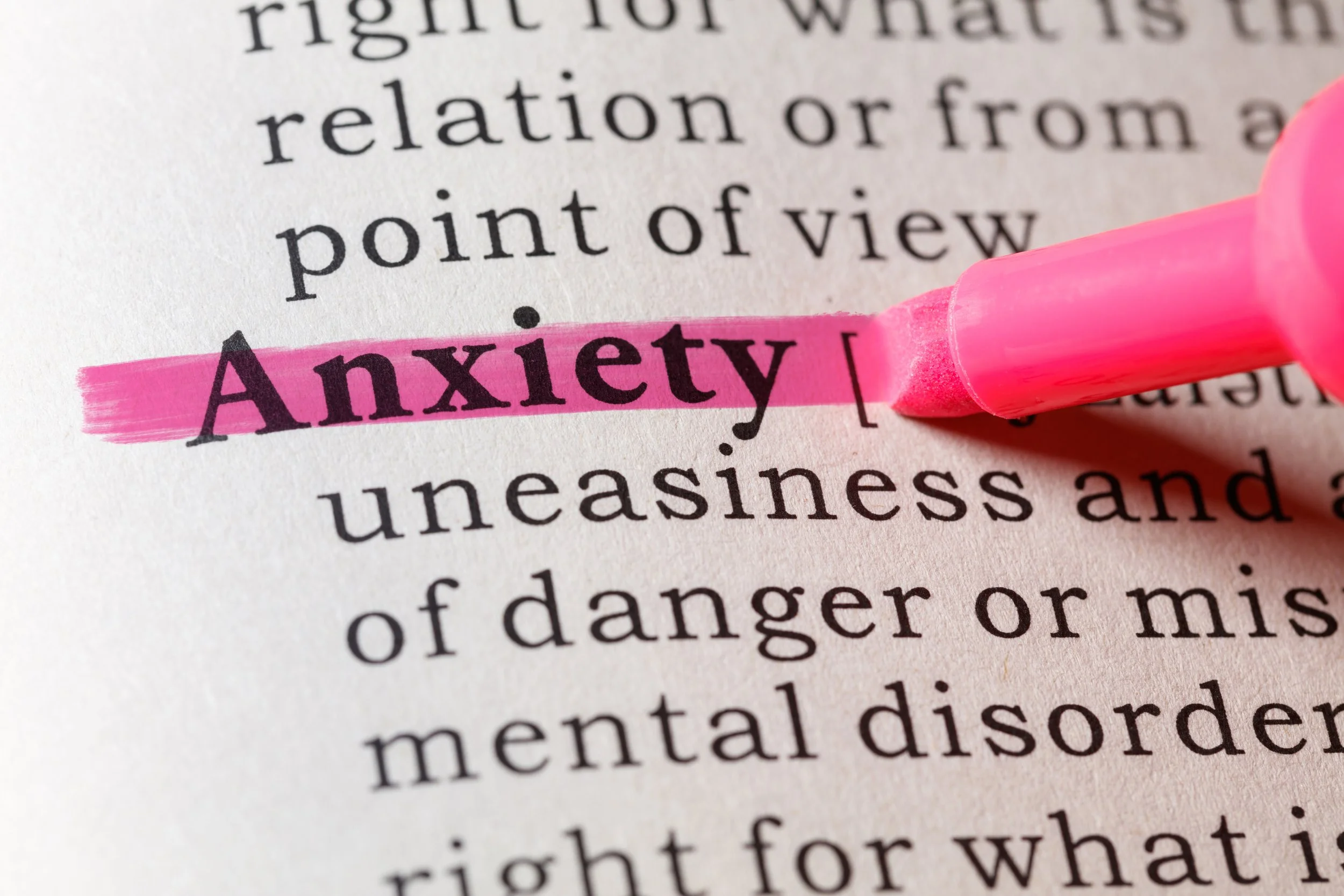
Understanding Anxiety: A Survival Signal, Not a Flaw
Anxiety is universal. Even those who seem cool, calm, and collected experience it. And for good reason — anxiety is necessary for our survival. That’s right: anxiety is necessary.
Is it pleasant? No.
Fun? Not really.
Embarrassing? Sometimes.
But it’s also unavoidable, necessary, and even useful.
The goal isn’t to eliminate anxiety. It’s to understand it, tolerate it, and even use it to our advantage when it shows up.
Anxiety is universal. Even those who seem cool, calm, and collected experience it. And for good reason — anxiety is necessary for our survival. That’s right: anxiety is necessary.
Is it pleasant? No.
Fun? Not really.
Embarrassing? Sometimes.
But it’s also unavoidable, necessary, and even useful.
The goal isn’t to eliminate anxiety. It’s to understand it, tolerate it, and even use it to our advantage when it shows up.
What Exactly Is Anxiety?
Anxiety is our body’s built-in alarm system. It’s the tingle in our toes, the butterflies in our stomach, the sweating, the quickened breath. These physical reactions are our body’s way of saying:
“Hey, pay attention! Something’s going on here.”
Think about our ancient ancestors. Anxiety helped them survive in dangerous, unpredictable environments. Imagine hunting for food — you had to stay alert and aware of every sound and movement. That tingle on the back of your neck could mean the difference between life and death. The racing heart, the adrenaline rush — all of it prepared the body to fight, flee, or freeze.
Thankfully, most of us aren’t dodging predators these days. But our modern “threats” — social situations, deadlines, tests, uncertainty about the future — trigger the same biological response.
Anxiety isn’t a character flaw or personal weakness; it’s biology. We are literally wired to survive. So if you’re one of the “lucky” ones who feels anxiety strongly, give your body a high-five — it’s just doing its job.
When Anxiety Overreacts
Sometimes, though, anxiety misfires. It warns us of danger when there isn’t any. It convinces us to avoid things we actually want to do. It makes us feel stuck, small, or alone.
But here’s the key: anxiety is a messenger, not the enemy.
Once we understand that, we can start building tolerance.
Breaking the Cycle of Avoidance
When we feel anxious or uncomfortable, our instinct is to avoid whatever’s causing it. Avoidance gives us temporary relief — we feel better for a moment, so our brain learns, “Ah, that worked!”
Unfortunately, this reinforces the idea that the situation was dangerous. The next time we face something similar, the anxiety hits even harder. This creates a cycle of anxiety → avoidance → more anxiety.
To break that cycle, we have to do something counterintuitive:
Face the discomfort — on purpose.
Building Tolerance Through Practice
One of the most effective ways to manage anxiety is to increase our tolerance by gradually placing ourselves in anxiety-provoking situations.
Yes, it’s uncomfortable — but that’s the point. Growth always feels that way at first. When the anxiety rises, remind yourself:
“I can handle this. This isn’t actually dangerous.”
Try small “comfort zone challenges” to build that muscle:
Start a conversation with a stranger.
Try a new hobby that feels intimidating.
Attend an event alone.
Share your opinion.
Take a cold shower.
Wear something you wouldn’t normally wear.
As you do, notice what happens in your body — where you feel the tension, what thoughts arise. Then, a few minutes later, notice how the intensity starts to fade.
You’re surviving the moment — and that’s how tolerance grows.
The Bottom Line
Anxiety isn’t a flaw to fix — it’s a signal to understand. When we learn to listen to it, tolerate it, and move through it, we reclaim our power.
Anxiety may never disappear entirely, but it doesn’t have to control your life. You can coexist with it — and even thrive because of it.
Would you like some more support to guide you through your recovery? Reach out to our office today and make an appointment.

Yoga and Mental Health: How Mindful Movement Supports Emotional Well-Being
In today’s fast-paced world, it’s easy for stress, anxiety, and emotional overwhelm to take hold. Many people are seeking ways to support their mental health beyond talk therapy, medication, or traditional self-care. One powerful approach that has gained recognition in both clinical and wellness communities is yoga.
In today’s fast-paced world, it’s easy for stress, anxiety, and emotional overwhelm to take hold. Many people are seeking ways to support their mental health beyond talk therapy, medication, or traditional self-care. One powerful approach that has gained recognition in both clinical and wellness communities is yoga.
Yoga is more than stretching or physical exercise—it is a practice that integrates the mind, body, and breath, helping individuals cultivate awareness, balance, and resilience. Research has shown that yoga can positively impact mental health by reducing stress, improving mood, and supporting emotional regulation.
How Yoga Supports Mental Health
1. Reduces Stress and Anxiety
Yoga encourages mindful breathing and relaxation, activating the parasympathetic nervous system—the body’s natural “rest and digest” response. This helps lower cortisol levels, calm the mind, and reduce the physical symptoms of stress and anxiety.
2. Improves Emotional Regulation
Through consistent practice, yoga helps individuals notice and respond to their emotions with awareness rather than react impulsively. This can be particularly beneficial for managing anger, frustration, or anxiety.
3. Enhances Mind-Body Connection
Trauma and chronic stress can disconnect us from our bodies, leaving us feeling tense, numb, or unsafe. Yoga emphasizes grounding, body awareness, and gentle movement, helping reconnect the mind and body in a safe, supportive way.
4. Boosts Mood and Resilience
Physical movement, breathwork, and mindfulness practices in yoga stimulate the release of endorphins and serotonin, improving overall mood. Regular practice also builds resilience, helping people cope with challenges more effectively.
5. Supports Trauma Healing
Certain forms of yoga, especially trauma-informed yoga, provide a safe environment for people to explore sensations, release tension, and regain a sense of control in their bodies. When combined with therapy, yoga can complement emotional healing in profound ways.
6. All Bodies Are Welcome
Yoga is for everyone—regardless of age, size, ability, or experience. Our approach emphasizes adaptation and accessibility, ensuring that each person can participate safely and comfortably. The practice is about connecting with your body, not achieving a specific pose or appearance. All bodies deserve to move, breathe, and experience the healing benefits of yoga.
Tips for Incorporating Yoga into Mental Health Care
Start small: Even 10–15 minutes a day can make a difference.
Focus on breath: Mindful breathing is often more impactful than the poses themselves.
Seek trauma-informed classes: Look for instructors trained to support people with trauma histories.
Combine with therapy: Yoga can complement counseling by enhancing self-awareness, stress reduction, and emotional regulation.
Be gentle and patient: Yoga is a journey, not a performance. Progress is measured in awareness, not flexibility.
Final Thoughts
Yoga is not a cure-all, but it is a powerful tool to support mental health. By integrating movement, mindfulness, and breath, individuals can cultivate a stronger mind-body connection, reduce stress, and foster resilience.
At Summit Family Therapy, I encourage clients to explore approaches like yoga alongside therapy to support holistic well-being. If you are ready to combine mind-body practices with evidence-based therapy for mental health, I invite you to schedule a session with me, Dr. Courtney Stivers, and begin your journey toward balance, healing, and emotional wellness.
For women seeking a supportive, healing environment, consider joining an upcoming Women’s Trauma Recovery Workshop. It’s a safe space to connect, process trauma, and explore tools—like yoga and mindfulness—that can empower your mental and emotional well-being.

We Are Growing! Meet Our New Counselors
2020 has been a very challenging year for the mental health of our community. Mental Health America reports that anxiety and depression rates have increased at an alarming pace, self harm and suicide are on the rise, people are struggling more with isolation and loneliness, and rates of anxiety, depression, and suicidal ideation are increasing for people of all races and ethnicities.
We Are Growing! Meet Our New Counselors
2020 has been a very challenging year for the mental health of our community. Mental Health America reports that anxiety and depression rates have increased at an alarming pace, self harm and suicide are on the rise, people are struggling more with isolation and loneliness, and rates of anxiety, depression, and suicidal ideation are increasing for people of all races and ethnicities. Numbers demonstrate that from January through September, pandemic enduring youth ages 11-17 have been more likely than any other age group to report moderate to severe symptoms of anxiety and depression and have the highest rates of suicidal ideation, especially LGBTQ+ youth. The number of youth reaching out for help is also increasing. Black or African Americans report the highest average percent change over time for anxiety and depression, while Indigenous Americans have had the highest average percent change over time for suicidal ideation.
We are very excited to announce that two seasoned counselors have joined our practice! Our hope is that we are able to support even more people who are struggling during the pandemic through this expansion, especially youth, families, and adults.

Erica Ray, M.Ed., LCPC
Erica Ray, M.Ed., LCPC, earned her Master of Arts in Education, School Counseling, from The University of Akron. She brings to our practice her experience with counseling in a school setting, developing wilderness experiences for at risk youth, therapeutic boarding school programming, collaborating with the Department of Child and Family Services, and has training in Trauma Focused CBT. Her client areas of focus are school aged children, teens, and adults. She has full time hours available to see clients.

Jayshree Panchal, MA, LCPC
Jayshree Panchal, MA, LCPC, graduated from Bradley University with a Master of Arts in Human Development Counseling. She brings many years of experience counseling adolescents, college students, and adults. She uses trauma informed approaches to treat grief and loss, improve relationships, assist with college preparation, and enhance career development. She has practiced in many settings, including schools, career centers, hospital units, and community mental health. She is practicing with us part time on evenings and weekends.
Please join us in celebrating this milestone for our practice. We know it is harder right now to find a counselor who is taking new clients because of the pandemic increasing the demand for services. If you are interested in scheduling a counseling session for yourself or your child, give us a call today at 309-713-1485 or email info@summitfamily.net.