


What If Your Hardest Feelings Are Trying to Help You?
In his newest book, Hard Feelings: Finding the Wisdom in Our Darkest Emotions, psychotherapist and author Daniel Smith invites us to reconsider something most of us have spent years trying to avoid: our so‑called negative emotions. Rather than treating anger, shame, envy, regret, jealousy, annoyance, boredom, or despair as problems to eliminate, Smith makes a compelling and deeply humane case that these emotions serve an essential purpose—if we are willing to listen to what they are trying to tell us.
In his newest book, Hard Feelings: Finding the Wisdom in Our Darkest Emotions, psychotherapist and author Daniel Smith invites us to reconsider something most of us have spent years trying to avoid: our so‑called negative emotions. Rather than treating anger, shame, envy, regret, jealousy, annoyance, boredom, or despair as problems to eliminate, Smith makes a compelling and deeply humane case that these emotions serve an essential purpose—if we are willing to listen to what they are trying to tell us.

Why This Book Feels So Relatable
One of the reasons Hard Feelings resonates is that it is not written from a place of emotional mastery, but from lived experience. Smith openly shares the contexts that stirred both his self‑consciousness and the emotional urgency behind this book. He traces three pivotal life experiences that forced him to confront emotions he would have preferred to avoid: the sudden end of his marriage, the profound emotional responsibility that came with becoming a parent, and his own aging process—each dismantling the illusion that emotional control alone is enough to live well.
Many of us can recognize ourselves here. We often talk about emotions as if they should be managed away—especially once we’re “adults.” Smith challenges this narrative, suggesting instead that emotional turbulence does not mean something is wrong with us; it may mean something important is happening.
Rethinking “Negative” Emotions
Smith asks a deceptively simple question: What if the emotions we resist the most aren’t obstacles, but guides? He explores emotions such as shame, envy, despair, boredom, and annoyance—not as character flaws, but as signals that illuminate our unmet needs, values, fears, and longings.
Rather than dividing feelings into “good” and “bad,” Smith demonstrates how this binary can actually disconnect us from ourselves. Suppressing emotions rarely makes them disappear; more often, it drives them underground, where they emerge as anxiety, irritability, numbness, or chronic dissatisfaction. From both his clinical work and personal history, Smith illustrates how listening to emotions—rather than silencing them—creates the possibility for insight, integration, and growth.
Practical Takeaways You Can Apply Today
While Hard Feelings is not a step‑by‑step self‑help guide, it offers several practical shifts in how we relate to our emotional lives:
Pause before fixing or dismissing a feeling. Ask, What might this emotion be trying to protect or show me?
Normalize emotional discomfort. Feeling envy, shame, or despair does not mean you are failing—it means you are human.
Notice emotional patterns instead of judging them. Repeated “hard” feelings often point to unresolved grief, unmet needs, or values that are being ignored.
Practice curiosity over self‑criticism. Shame deepens when we attack ourselves for having emotions; it softens when we approach ourselves with compassion.
These practices echo what many therapists see in the therapy room: meaningful change often begins not when emotions disappear, but when they are finally given space to be understood.
Why This Matters for Psychotherapy
Hard Feelings aligns closely with the work of psychotherapy. Therapy is not about removing difficult emotions—it’s about learning how to relate to them differently. Many people seek therapy because their emotions feel overwhelming, confusing, or intrusive. This book gently reframes that experience: emotions are not the enemy; they are information.
In therapy, these “hard feelings” can be explored in a safe, non‑judgmental space. Anger may reveal a violated boundary. Envy may point to a neglected desire. Despair may signal grief that never had room to be felt. When emotions are listened to rather than suppressed, they often become less frightening—and more meaningful.
A Gentle Invitation
If this book resonates with you—if you find yourself exhausted by your emotions, ashamed of them, or unsure how to make sense of them—you don’t have to navigate that alone. Psychotherapy can help transform overwhelming emotional experiences into insight, self‑understanding, and healing. Beginning therapy isn’t a sign that something is wrong; it’s often a sign that something inside you is ready to be heard.
References
Smith, D. (2026). Hard Feelings: Finding the Wisdom in Our Darkest Emotions. Simon & Schuster. [amazon.com]
Simon & Schuster. (2026). Hard Feelings – Official Book Description. https://www.simonandschuster.com/books/Hard-Feelings/Daniel-Smith/9781982103903 [simonandschuster.com]
Altschuler, G. C. (2026). Coping with our “bad” emotions isn’t easy. Psychology Today. [psychologytoday.com]
Zozzaro, P. (2026). Review: Hard Feelings by Daniel Smith. BookTrib. https://booktrib.com/2026/03/03/review-hard-feelings-daniel-smith/ [booktrib.com]
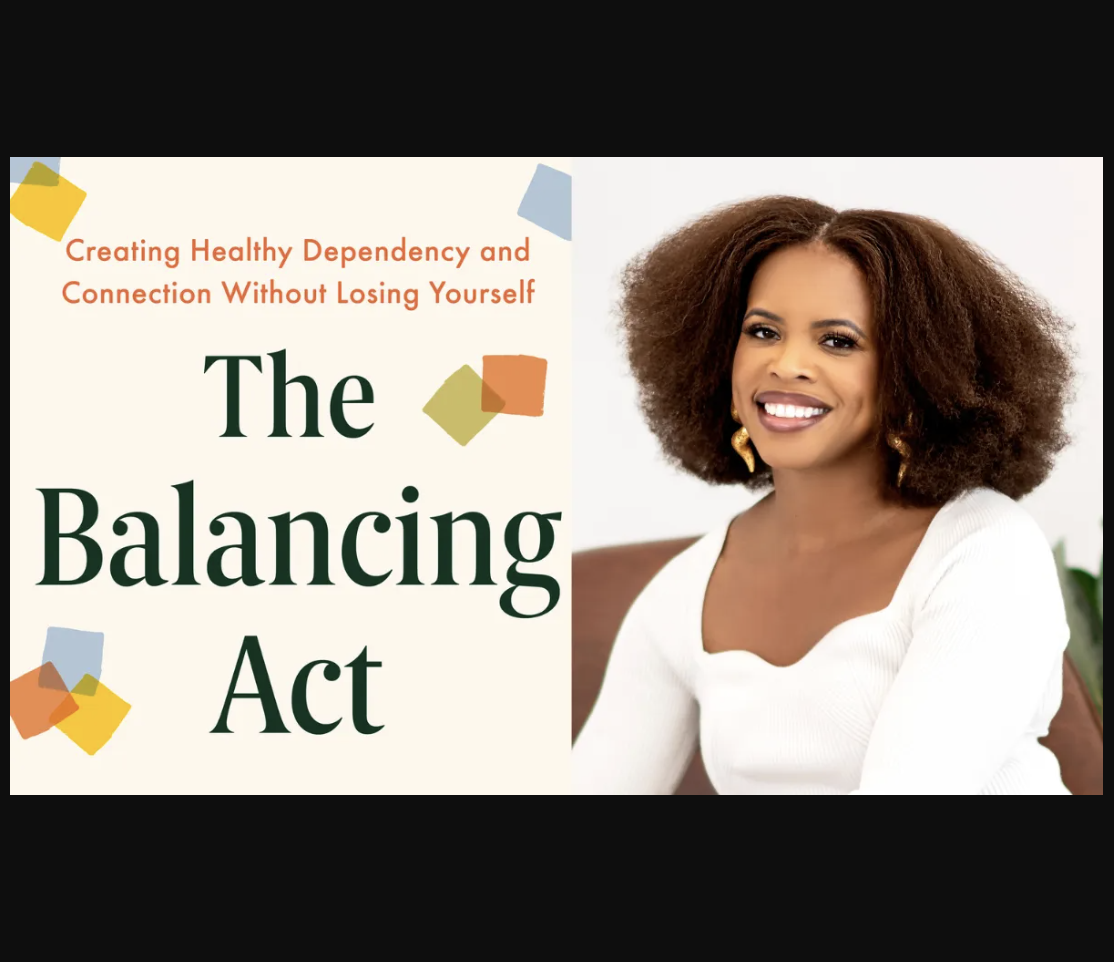
Finding the Sweet Spot: How to Stay Connected Without Losing Yourself
In her newest book, The Balancing Act: Creating Healthy Dependency and Connection Without Losing Yourself, licensed therapist and bestselling author Nedra Glover Tawwab explores a question many people quietly wrestle with: How do we stay connected to others without losing ourselves in the process?
In her newest book, The Balancing Act: Creating Healthy Dependency and Connection Without Losing Yourself, licensed therapist and bestselling author Nedra Glover Tawwab explores a question many people quietly wrestle with: How do we stay connected to others without losing ourselves in the process?
Building on her previous work on boundaries and family dynamics, Tawwab reframes dependency as something that isn’t inherently unhealthy—but rather something that exists on a spectrum. When balanced well, healthy dependency (often referred to as interdependence) can support connection, authenticity, and emotional well‑being.
Part One: Understanding the Dependency Spectrum
In the first section of the book, Tawwab introduces the dependency spectrum, ranging from hyper‑independence on one end to hyper‑dependence on the other. She helps readers identify where they tend to land and how early experiences, trauma, attachment patterns, and fear of rejection or abandonment can shape how they relate to others.
Hyper‑independence often shows up as “I don’t need anyone,” while hyper‑dependence may look like over‑giving, losing boundaries, or abandoning one’s own needs to maintain connection. Tawwab emphasizes that both extremes can lead to loneliness, disconnection, and emotional exhaustion.
Part Two: Moving Toward Healthier Connection
In the second half of the book, Tawwab outlines a path toward healing and balance, offering tools for those who struggle with either extreme. She helps readers learn how to distinguish between faux connection—relationships that are maintained out of fear, obligation, or distraction—and deep, meaningful connection, which allows space for authenticity, boundaries, and mutual care.
Tawwab also highlights forms of dependency that can quietly keep people stuck, including:
Overreliance on social media and technology
Dependency on substances
Unbalanced relationship patterns within one’s social life
Rather than encouraging all‑or‑nothing thinking, she invites readers to examine how and why they depend on certain people or behaviors—and whether those patterns support or erode their well‑being.
Practical Applications for Everyday Life
One of the book’s strengths is its practical, real‑world focus. Readers are encouraged to:
Practice asking for help in clear, direct ways
Build a diversified support system instead of relying on one person for all emotional needs
Allow room for discomfort and repair in relationships, recognizing that friction can be part of healthy growth
Balance time alone with time together—learning to be both independent and connected
Reframe boundaries as pathways to closeness rather than barriers to intimacy
These tools can be especially helpful for individuals recovering from codependent patterns, trauma, or emotionally unbalanced relationships.
Why This Book Matters
At its core, The Balancing Act reminds readers that relationships are about human engagement, not perfection or self‑sufficiency. We thrive when we allow ourselves to lean on others while also maintaining autonomy. Working toward healthier dependency can support mental, physical, and social well‑being—offering opportunities for protection, restoration, and more harmonious connections.
For individuals seeking to deepen relationships without losing themselves—and for those healing from extremes of independence or dependence—this book offers a compassionate, grounded guide forward.
References
Tawwab, N. G. (2026). The Balancing Act: Creating Healthy Dependency and Connection Without Losing Yourself. Tarcher / Penguin Random House. [amazon.com]
Tawwab, N. G. (2026). The Balancing Act – Official Book Description. Nedra Tawwab. https://www.nedratawwab.com/books/the-balancing-act [nedratawwab.com]
Johnson, R. (2026). “The Balancing Act” (Healthy Dependency): Nedra Glover Tawwab. Minding Therapy. https://www.mindingtherapy.com/balancing-act-nedra-glover-tawwab/ [mindingtherapy.com]
Lindsay, S. (2026). Nedra Glover Tawwab Says This Is How to Create Healthy Relationships. The Sunday Paper. https://www.mariashriversundaypaper.com/nedra-glover-tawwab-create-healthy-relationships/ [mariashriv...ypaper.com]

When Joy Feels Out of Reach: Understanding Anhedonia
Have you ever noticed that things you used to enjoy just don’t feel the same anymore? Maybe your favorite foods taste flat, time with friends feels draining instead of fulfilling, or activities that once brought excitement now feel empty. If this sounds familiar, you’re not alone—and there’s a name for this experience: anhedonia.
Have you ever noticed that things you used to enjoy just don’t feel the same anymore? Maybe your favorite foods taste flat, time with friends feels draining instead of fulfilling, or activities that once brought excitement now feel empty. If this sounds familiar, you’re not alone—and there’s a name for this experience: anhedonia.

What Is Anhedonia?
Anhedonia is the reduced or lost ability to experience pleasure from activities that are typically enjoyable. It’s most commonly associated with depression, but it can also occur in people experiencing anxiety, PTSD, substance use disorders, eating disorders, autism spectrum disorder, schizophrenia, or certain neurological conditions. Importantly, anhedonia can also occur without a formal diagnosis of depression.
Rather than sadness, many people describe anhedonia as emotional numbness—a sense of being disconnected from joy, motivation, or meaning.
Types of Anhedonia
Anhedonia can show up differently for different people, but it’s often described in two main ways:
Social anhedonia: Difficulty experiencing pleasure or connection from social interactions, relationships, or group activities.
Physical anhedonia: Reduced pleasure from physical sensations such as eating, physical touch, listening to music, or sexual activity.
Someone may experience one type, both types, or move between them over time.
Anhedonia vs. Apathy: What’s the Difference?
These two terms are often confused, but they’re not the same:
Anhedonia refers to an inability to feel pleasure, even when you want to.
Apathy refers to a lack of motivation, interest, or emotional engagement.
You might still want connection or enjoyment but not be able to feel it (anhedonia), or you might feel indifferent about engaging at all (apathy). A person can experience one without the other.
Common Signs of Anhedonia
Symptoms can range from subtle to deeply impactful and may include:
Reduced interest in activities you previously enjoyed
Difficulty planning or initiating activities
Little excitement or anticipation about future events
Trouble feeling joy, even during positive moments
Decreased pleasure from food, physical touch, or sex
Social withdrawal or disconnection
Feeling lonely even when surrounded by others
If you recognize yourself in this list, it’s important to know that anhedonia is not a personal failure. It often reflects how the brain and nervous system respond to prolonged stress, trauma, or emotional overload.
Therapy Treatment Options
Anhedonia is treatable, though improvement often happens gradually.
Cognitive Behavioral Therapy (CBT)
CBT can help stimulate the brain’s reward system by identifying patterns that reduce engagement and gently rebuilding responses to positive experiences.Behavioral Activation Therapy
This approach focuses on increasing involvement in meaningful or value‑based activities—even when motivation or pleasure is low—to help reawaken positive emotional responses over time.Mindfulness‑Based Interventions
Mindfulness practices can help people notice small moments of presence, comfort, or neutrality and reduce avoidance of emotional experiences. These approaches have been helpful for people with chronic stress, trauma histories, and substance use recovery.
Things You Can Try on Your Own
Healing from anhedonia often involves small, compassionate steps rather than big emotional shifts. You might consider:
Practicing mindfulness to gently notice moments of neutrality or comfort
Maintaining social connections, even when you don’t feel like it
Establishing a regular sleep schedule and predictable daily routine
Engaging in regular physical movement
Keeping a brief journal of small, positive, or meaningful moments
Being patient with yourself and acknowledging tiny improvements
Joining support groups where others understand what you’re experiencing
Seeking guidance from a therapist, coach, or trusted mentor to explore how you respond to stress and negative experiences
A Gentle Reminder
If you’re experiencing anhedonia, it doesn’t mean joy is gone forever. It means your system may need care, time, and support. You don’t have to force yourself to “feel better” to move toward healing.
If this resonates with you, a mental health professional can help you explore what’s happening and find a path forward that feels manageable and supportive.
References & Further Reading
Cleveland Clinic. (2023). Anhedonia: What it is, causes, symptoms & treatment.
https://my.clevelandclinic.org/health/symptoms/25155-anhedoniaWebMD. (2025). Anhedonia: Meaning, types, causes, and treatment.
https://www.webmd.com/depression/what-is-anhedoniaSerretti, A. (2023). Anhedonia and depressive disorders. Clinical Psychopharmacology and Neuroscience, 21(3), 401–409.
https://pmc.ncbi.nlm.nih.gov/articles/PMC10335915/Psychology Today. (n.d.). Anhedonia.
https://www.psychologytoday.com/us/basics/anhedoniaHanuka, S., et al. (2023). Reduced anhedonia following cognitive‑behavioral therapy is mediated by enhanced reward circuit activation. Psychological Medicine.
https://www.cambridge.org/core/journals/psychological-medicine/article/abs/reduced-anhedonia-following-internetbased-cognitivebehavioral-therapy-for-depression-is-mediated-by-enhanced-reward-circuit-activation/B9806BEDB39FD3A4D60DCE12DF2C5AAB

Red Flags in Therapy: How to Know When a Therapist Isn’t the Right Fit—and How to Choose One Who Is
Therapy is often described as a safe space—and at its best, it truly is.
But the reality is this: not all therapy is good therapy, and not every licensed therapist practices ethically, attentively, or skillfully.
As a therapist myself, I’ve sat with many clients who didn’t just struggle before therapy—but were harmed by it.
Many of them hesitated to say anything because of thoughts like:
“Maybe this is just my discomfort.”
“They’re the professional—this must be normal.”
“I don’t want to be difficult or dramatic.”
Therapy is often described as a safe space—and at its best, it truly is.
But the reality is this: not all therapy is good therapy, and not every licensed therapist practices ethically, attentively, or skillfully.
As a therapist myself, I’ve sat with many clients who didn’t just struggle before therapy—but were harmed by it.
Many of them hesitated to say anything because of thoughts like:
“Maybe this is just my discomfort.”
“They’re the professional—this must be normal.”
“I don’t want to be difficult or dramatic.”
Let me be clear: If something in therapy feels wrong, dismissive, unsafe, or inappropriate, that matters.
Let’s talk about some very real red flags in therapy—including experiences clients have shared with me—and then we’ll cover how to choose a therapist who actually supports healing.

Common Red Flags in Therapy (Yes, These Are Real Examples)
1. The Therapist Is Distracted or Multitasking During Sessions
One client shared that their therapist routinely opened personal mail during sessions, sorting envelopes while the client talked about deeply distressing events.
Another described sessions being paused so the therapist could microwave food—then eat it in front of them while continuing the conversation.
These are not neutral behaviors.
They communicate something loudly and clearly:
You do not have my full attention.
Therapy requires presence. Multitasking during sessions—especially in ways unrelated to client care—undermines trust and signals a lack of professional boundaries.
2. The Session Becomes About the Therapist
I’ve heard from multiple clients who described sitting through entire sessions where:
The therapist talked almost exclusively about their own life
Personal stories were shared without clinical purpose
No meaningful questions were asked
One client described leaving sessions thinking,
“I know more about my therapist than they know about me.”
Self‑disclosure can be helpful when it serves the client’s process.
When it replaces curiosity, assessment, and exploration, it’s a red flag.
Therapy is not a reciprocal friendship. It should be client‑centered at all times.
3. You Feel Judged, Shamed, or Dismissed
Therapy can be challenging—but it should never be shaming.
Red flags include:
Being told you’re “overreacting” without exploration
Subtle blame for your trauma responses
Feeling criticized rather than understood
Discomfort that leads to growth feels very different from discomfort that comes from feeling minimized or evaluated.
4. The Therapist Pushes Forgiveness, Reconciliation, or “Moving On” Too Soon
This happens frequently, especially for trauma survivors.
Statements like:
“Holding onto this isn’t healthy”
“You just need to forgive them”
“At some point you have to move on”
…can override your nervous system’s need for safety, pacing, and meaning‑making.
Healing is not a deadline‑based process. Forgiveness is a personal choice—not a therapeutic requirement.
5. Poor or Confusing Boundaries
Healthy therapy relies on clear, consistent boundaries.
Red flags include:
Oversharing personal information without clinical purpose
Boundary blurring that makes you feel responsible for the therapist’s feelings
Contact outside of sessions that feels confusing or uncomfortable
Boundaries aren’t cold—they’re what make therapy feel safe, predictable, and grounded.
What Good Therapy Typically Feels Like
Good therapy isn’t perfect or painless—but it is respectful.
In healthy therapy:
The therapist is present and attentive
Your feedback is welcomed, not defended against
You understand what you’re working on and why
You feel more connected to yourself over time
A good therapist does not act as the authority on your life.
They work with you, not over you.
How to Choose a Therapist (Practical Guidance)
1. Look for Fit, Not Just Credentials
Licensure matters. Training matters.
But relational fit matters just as much.
You are allowed to ask:
What approach they use
How they handle feedback or ruptures
What populations or issues they specialize in
You are not being difficult—you are being informed.
2. Notice the First Few Sessions
Early sessions should feel:
Structured but flexible
Curious rather than interrogative
Emotionally safe, even if hard
Persistent uneasiness, dismissal, or boundary confusion early on usually doesn’t improve with time.
3. Know That Leaving Is Allowed
You do not owe a therapist:
Loyalty
Extra sessions to make it “less awkward”
Silence if something doesn’t feel right
Ending therapy that isn’t helping is not failure. It is self‑advocacy.
A Final Word
Therapy can be deeply transformative—but only when it’s practiced ethically, skillfully, and with full respect for the person seeking help.
Trust your body’s cues.
Ask questions.
Expect attention, presence, and professionalism.
Good therapy should help you feel more empowered, not smaller.

Post-Divorce Pouncing: Why Hitting on Women Immediately After Divorce Is a Bad Idea
When a woman gets divorced, something predictable—and exhausting—often happens.
Before the paperwork is finalized, before the dust settles, sometimes before the ink is even dry, the messages start coming in. “Just checking on you.” “You deserve to be treated better.” “I’ve always admired you.”
What follows is rarely subtle. Support quickly morphs into flirtation. Concern turns into pursuit.
As both a therapist and a woman, I’ve seen this pattern repeatedly. It’s common, it’s harmful, and it deserves a name.
When a woman gets divorced, something predictable—and exhausting—often happens.
Before the paperwork is finalized, before the dust settles, sometimes before the ink is even dry, the messages start coming in. “Just checking on you.” “You deserve to be treated better.” “I’ve always admired you.”
What follows is rarely subtle. Support quickly morphs into flirtation. Concern turns into pursuit.
As both a therapist and a woman, I’ve seen this pattern repeatedly. It’s common, it’s harmful, and it deserves a name.
Counselors call it Post-Divorce Pouncing—a term that describes the tendency for people (most often men) to pursue women romantically or sexually immediately after a divorce or separation, mistaking vulnerability for availability.

Divorce Is Not a Dating Announcement
Divorce is often misread as a reset button:
She’s single now.
She must be lonely.
This is my chance.
But psychologically speaking, divorce is not an entry point into dating—it’s a major nervous system event.
Divorce typically involves:
Grief and identity loss
Disruption of emotional and physical safety
Chronic stress tied to legal, financial, and parenting changes
A period of emotional recalibration that can last months or years
From a clinical perspective, the brain and attachment system are in repair mode. People are reassessing who they are, what they want, and what they will no longer tolerate.
That moment is not about readiness—it’s about reconstruction.
What Is Post-Divorce Pouncing?
Post-Divorce Pouncing occurs when someone:
Moves in romantically before emotional stabilization has occurred
Interprets someone’s pain or openness as sexual or relational interest
Treats vulnerability like an invitation rather than a boundary
It’s often framed as kindness or attraction, but the timing reveals something else: urgency rooted in opportunity, not mutual readiness.
Why Post-Divorce Pouncing Is a Problem
Even when intentions are not malicious, the impact can be harmful.
1. It Turns Support Into a Transaction
Women going through divorce often need:
Stability
Respectful connection
Validation of their worth without strings attached
When support rapidly becomes romantic, the unspoken message can feel like:
“I care—as long as there’s something in it for me.”
That erodes trust, not builds it.
2. It Exploits a Temporary Power Imbalance
Periods of emotional upheaval can make people more likely to:
Second-guess their instincts
Accept attention rather than evaluate compatibility
Confuse intensity with intimacy
This is how rebound relationships form—not from clarity, but from unhealed pain and skewed timing.
3. It Interrupts Necessary Healing
Emotional processing after divorce is not optional—it’s essential.
Rushing into new romantic dynamics can:
Delay grief
Reinforce avoidance rather than growth
Create relationships built on distraction rather than stability
In therapy, we consistently see that untreated post-divorce grief resurfaces later—often inside the next relationship.
A Word to the People Doing the Pursuing
If you feel tempted to make a move immediately after someone’s divorce, pause and ask yourself:
Am I responding to who this person is, or to an opening in the timeline?
Would I move at this pace if she were emotionally steady?
Am I offering space—or pressure?
Healthy interest is patient. It doesn’t rush intimacy or position itself as the solution to someone else’s loss.
To Women Navigating This Phase: You’re Not Overreacting
If you’ve felt overwhelmed by sudden attention or pressured to be “ready” before you are—nothing is wrong with you.
You are allowed to say no.
You are allowed to take space.
You are allowed to heal without being pursued.
Needing time is not resistance—it’s wisdom.
Final Thought
Divorce is not a signal to advance—it’s a signal to slow down.
If you genuinely respect a woman who is newly divorced, the most caring response might be giving her room to become whole again—without claiming, chasing, or rushing her becoming.
Post-Divorce Pouncing doesn’t create connection.
Presence, patience, and respect do.

Post Vacation Reflection: Coming Back Sunburned, Grateful, and Slightly Wobbly
There is something deeply humbling about returning from vacation and realizing three things at once:
You are very glad you went.
You miss it already.
Your legs are not convinced you are back on land.
Stepping off the cruise ship, I genuinely wondered if I had forgotten how to walk. My body swayed like it was still negotiating waves, and for a brief moment I questioned whether balance—literal and metaphorical—was optional. It turns out, both take a minute to come back.
That felt like an appropriate metaphor for this season of life.
There is something deeply humbling about returning from Spring Break vacation and realizing three things at once:
You are very glad you went.
You miss it already.
Your legs are not convinced you are back on land.
Stepping off the cruise ship, I genuinely wondered if I had forgotten how to walk. My body swayed like it was still negotiating waves, and for a brief moment I questioned whether balance—literal and metaphorical—was optional. It turns out, both take a minute to come back.
That felt like an appropriate metaphor for this season of life.
As I ease back into routines, inboxes, and the laundry that somehow multiplied while we were gone, one feeling keeps rising above the rest: gratitude.
It is a privilege to be healthy.
It is a privilege to have a healthy family.
It is a privilege to have the financial ability and flexibility to take a vacation at all.
And it is a privilege to be invited into community.

Grateful for the Invitation—and the People Who Made It Sweeter
This trip wasn’t something we did alone. We were invited by a generous group, and one of the unexpected gifts of the week was connecting not just with them, but with their extended family as well. Shared meals, easy conversations, laughter that didn’t require explanation—those moments mattered.
There is something grounding about being welcomed into spaces where connection feels natural and unforced. It reminded me that rest isn’t only about location; it’s about who you’re with. Community has a way of multiplying joy and making memories feel richer, and we are deeply thankful for the people who made this experience possible.
The Beach Photo That Says Everything
Like all good family vacations, there is the photo.
Our family beach photo includes my 14‑year‑old son, who made it very clear that participation was not his preference. He didn’t refuse outright—because he’s kind—but he did protest. Subtly. In the background. With his whole body.
So there we are: smiling, sun‑kissed, grateful… and behind us, a teenager silently communicating, I am here against my will.
Honestly? I love that picture. Because it’s honest. It captures the stage of life we’re in—where togetherness sometimes looks like compromise, eye‑rolling, and showing up anyway.
And that matters.

Holding Time Gently With My Daughter
One of the sweetest gifts of this trip was the time with my 11‑year‑old daughter. Unhurried conversations. Laughter. Shared moments that didn’t need multitasking.
If I’m being honest, I often work more than I should. I love my work. I believe deeply in it. But vacations have a way of gently reminding me that time is both precious and fleeting.
She is still at an age where she wants to be close, where presence matters more than productivity. That awareness sat tenderly with me this week—not with guilt, but with intention. Time together isn’t something to schedule later. It’s something to cherish now.
Naming the Burnout (Because It Was There)
This vacation came at a moment when I was burned out.
Not the dramatic, fall‑apart kind—but the quieter version that sneaks in when responsibility stacks up, when you’re holding space for others, making decisions, and carrying emotional weight for a long time without much pause. The kind where you’re still functioning, still caring, still showing up—but you’re tired in a way that sleep alone doesn’t fix.
Winter intensified that for me. Short days. Full calendars. A nervous system that had been “on” for longer than I realized.
I didn’t fully notice how depleted I was until we slowed down.
Vacation didn’t erase the burnout—but it interrupted it. It gave my nervous system a chance to settle. It reminded me what it feels like to wake up without urgency, to laugh without multitasking, to be present without planning the next thing.
From a psychoeducation standpoint, this matters: burnout recovery is less about escaping responsibility and more about helping the body complete stress responses and return to a felt sense of safety.
Gentle Burnout Recovery Reminders (Inspired by Emily Nagoski)
One framework I often return to—personally and professionally—comes from Emily Nagoski’s work on burnout. A few gentle reminders that stood out to me on this trip:
Burnout isn’t a personal failure. It’s what happens when stress accumulates faster than our bodies can process it. You’re not broken—you’re overloaded.
Rest alone doesn’t complete the stress cycle. Sleep is important, but our bodies often need movement, connection, laughter, or emotional expression to truly reset.
Physical movement helps the body feel “done.” Even gentle walking, stretching, or dancing can signal to the nervous system that the stressor has passed.
Connection is regulation. Safe relationships—shared meals, hugs, laughter, meaningful conversation—help the body return to calm far more effectively than isolation.
Burnout recovery happens in small, repeated moments. Not one vacation. Not one weekend. But consistent permission to rest, connect, and slow down over time.
Burnout narrows our world. These practices slowly widen it again.
The Ups, the Downs, and the Reset We Needed
Yes, there were beautiful moments—sunshine, slow mornings, meals without rushing, laughter that felt lighter than it has in months. There were also tired moments, overstimulation, minor meltdowns, and at least one “Why did we think this would be restful?” realization.
Vacation doesn’t remove real life. It just gives it a different backdrop.
But after a long winter—emotionally, mentally, and seasonally—this reset mattered. Winter has a way of tightening us up. By the time spring arrives, many of us don’t realize how much we’ve been bracing until we finally stop.
This trip gave us space to breathe again.

Health, Provision, and the Gift of Possibility
One quiet but powerful truth stayed with me: none of this is guaranteed.
Health is not guaranteed.
Time is not guaranteed.
Opportunities to rest, travel, and reconnect are not guaranteed.
Being able to walk off a ship (eventually), spend time with people we love, meet new family friends, laugh together, and simply be—that is a gift.
Gratitude doesn’t deny hardship. It deepens appreciation for what is present.
Coming Home Re‑Grounded (and Mostly Steady)
I didn’t come home magically transformed or suddenly immune to stress. But I did come home more grounded. More aware of what matters. More committed to protecting time with my family—and to remembering that balance, like sea legs, takes intentional recalibration.
And yes, I’m still finding my footing.
If this season finds you tired, longing for rest, or unsure how to regain balance, let this be your reminder: renewal doesn’t have to be dramatic. Sometimes it starts with stepping away. Sometimes it starts with gratitude. Sometimes it starts with noticing the beauty—even when someone is protesting in the background.
I’m grateful we went.
I’m grateful for the people who invited us and welcomed us.
I’m grateful we came back.
And I’m grateful for the reminder of what truly steadies us.

Resources
Nagoski, E., & Nagoski, A. (2019). Burnout: The Secret to Unlocking the Stress Cycle. Ballantine Books.
Nagoski, E. & Nagoski, A. Burnout Project & resources: https://www.burnoutbook.net/
CPTSD Foundation. Completing the Stress Cycle (overview of Nagoski’s framework)
The State of the Union: A Weekly Check‑In That Can Transform Your Relationship
Most couples don’t drift apart because they don’t care.
They drift apart because life gets loud.
Between work, kids, stress, trauma histories, neurodivergent brains, grief, and exhaustion, relationships often become reactive instead of intentional. Conversations turn into arguments. Important topics get avoided. And before you know it, connection gets replaced by distance.
Most couples don’t drift apart because they don’t care.
They drift apart because life gets loud.
Between work, kids, stress, trauma histories, neurodivergent brains, grief, and exhaustion, relationships often become reactive instead of intentional. Conversations turn into arguments. Important topics get avoided. And before you know it, connection gets replaced by distance.
That’s where the Gottman Method’s “State of the Union” meeting comes in.
This isn’t about fixing everything or having perfect communication. It’s about creating a predictable, emotionally safe space to check in, repair, and stay connected—before resentment builds.

What Is a State of the Union Meeting?
Developed by Drs. John and Julie Gottman, the State of the Union is a weekly relationship check‑in designed to help couples:
Stay emotionally connected
Address concerns gently
Build appreciation and fondness
Reduce blow‑ups and emotional shutdowns
Think of it as preventative maintenance for your relationship, not a crisis meeting.
According to the Gottman Institute, this structured conversation helps couples talk about what’s working, what’s not, and what needs attention—without turning every issue into a fight.
Why Weekly Check‑Ins Matter
Many couples tell me,
“We talk all the time—why do we need a meeting?”
Here’s the difference:
Most daily conversations are logistical (“Who’s picking up the kids?”) or reactive (“Why didn’t you text me back?”).
The State of the Union is intentional.
Research consistently shows that how couples talk about problems predicts relationship outcomes more than the problems themselves. Regular check‑ins reduce defensiveness, increase emotional attunement, and help couples feel like a team again.
The Four Core Parts (Made Practical)
1. Start With Appreciation (Yes, Even If You’re Annoyed)
Each partner shares five specific appreciations from the past week.
Not:
“Thanks for being a good spouse.”
But:
“I appreciated how you handled bedtime when I was overwhelmed. It made me feel supported.”
Why this matters: Appreciation activates safety in the nervous system and sets a collaborative tone for harder conversations.
Tip: If five feels like too much, start with three. Consistency matters more than perfection.
2. Talk About What Went Well
This step is often skipped—and it’s a mistake.
Ask:
When did we feel connected this week?
What did we handle well together?
What do we want to keep doing?
Couples who intentionally name their strengths build emotional resilience, making it easier to navigate conflict when it shows up.
3. Address Concerns Gently (One at a Time)
This isn’t the time to unload the entire relationship history.
Choose one issue or a “regrettable incident” from the week.
Use a softened start‑up, which the Gottman research shows is crucial for preventing escalation:
“I feel ___ about ___, and what I need is ___.”
Example:
“I felt disconnected when we didn’t talk after dinner. I need some intentional check‑in time.”
During this part, Gottman emphasizes ATTUNEMENT:
Awareness
Tolerance
Turning toward
Understanding
Non‑defensive listening
Empathy
Tip: If either partner feels flooded or overwhelmed, pause. Regulation comes before resolution.
4. End With Connection
Before wrapping up:
Express affection
Thank each other for showing up
Name one thing you’re hopeful about
This helps the conversation end in connection rather than depletion, reinforcing that you’re on the same side.
Making It Work in Real Life
Let’s be honest—weekly meetings can sound unrealistic.
Here’s how couples actually make it stick:
✅ Same day, same time each week
✅ Phones away
✅ Keep it under 60 minutes
✅ Snacks count as emotional support
Some couples start with 15–20 minutes and build from there. That still counts.
When It’s Especially Helpful
The State of the Union is particularly powerful for couples navigating:
Parenting stress
ADHD or neurodivergence
Trauma or loss
High‑conflict cycles
Emotional distance
It provides structure when emotions feel messy and safety when conversations feel risky.
Final Thoughts
Healthy relationships aren’t conflict‑free.
They’re repair‑rich.
The State of the Union isn’t about doing everything right—it’s about showing up regularly, with intention, curiosity, and care.
If you’re feeling stuck, disconnected, or unsure how to have these conversations without things spiraling, couples therapy can help guide the process and tailor it to your unique relationship.
Your relationship deserves that kind of care.
Spring Break Isn’t Always a Break: Managing Stress, Expectations, and Overstimulation
Spring break is supposed to feel like relief.
A pause.
A reset.
A chance to rest, connect, and maybe even enjoy ourselves.
And yet, for many people—especially parents, caregivers, and neurodivergent adults—spring break can feel anything but restful. In my therapy office, I hear it every year: “I thought I’d feel better… but I’m more exhausted than before.”
As both a therapist and someone with ADHD, I want to say this clearly:
If spring break doesn’t feel like a break for you, you’re not doing it wrong.
Spring break is supposed to feel like relief.
A pause.
A reset.
A chance to rest, connect, and maybe even enjoy ourselves.
And yet, for many people—especially parents, caregivers, and neurodivergent adults—spring break can feel anything but restful. In my therapy office, I hear it every year: “I thought I’d feel better… but I’m more exhausted than before.”
As both a therapist and someone with ADHD, I want to say this clearly:
If spring break doesn’t feel like a break for you, you’re not doing it wrong.

Why Spring Break Can Increase Stress Instead of Relieve It
Spring break often disrupts the very things that help us feel regulated: routine, predictability, and structure. School schedules change. Work expectations stay the same. Childcare becomes more complicated. Travel, crowds, noise, and social demands increase.
From a nervous‑system perspective, our bodies don’t automatically interpret “time off” as safe or calming. For many people—especially those already stretched thin—these sudden shifts can push us outside our window of tolerance, making regulation harder, not easier.
This isn’t a personal failure.
It’s biology.
The Pressure to Make Spring Break “Magical”
There’s also an unspoken expectation that spring break should be special.
Fun.
Memory‑making.
Instagram‑worthy.
But that pressure—especially for parents—can quietly turn into emotional labor. Planning, coordinating, managing behavior, keeping everyone entertained, and making it all look effortless takes energy. A lot of it.
At Summit Family Therapy, we often talk about the importance of good‑enough parenting—letting go of perfection in favor of connection and compassion. Spring break is a perfect place to practice that mindset.
Your kids don’t need a perfect break.
They need a regulated, emotionally available adult.
And sometimes that means lowering the bar.
A Personal Note: Spring Break and ADHD
I want to share this from a personal place.
As someone with ADHD, spring break can be especially challenging for me. Changes in routine are hard. Increased noise and stimulation drain my energy quickly. Transitions—between activities, plans, or expectations—take more mental effort than most people realize.
Even “fun” can be overstimulating.
When I don’t plan for that, I find myself more irritable, more exhausted, and more likely to feel like I’m failing at things that should feel easy. Over time, I’ve learned that managing ADHD during breaks isn’t about pushing through—it’s about working with my brain instead of against it.
That means building in recovery time, protecting my energy, and being honest about my limits. This isn’t weakness. It’s self‑awareness.
Having a Plan and Managing Expectations Can Reduce Anxiety
One of the most helpful things we can do during spring break is hold two truths at the same time:
Having some plan can reduce anxiety
Rigid expectations can increase it
For many people—especially those with anxiety, ADHD, or trauma histories—uncertainty is one of the biggest stressors. When everything feels up in the air, our brains stay on high alert. A loose plan—knowing what the day generally holds, what’s expected, and what support is available—can help calm the nervous system.
At the same time, overly detailed or perfectionistic plans often backfire. When things inevitably don’t go exactly as expected (because… life), frustration and self‑criticism creep in.
What tends to work best is flexible structure:
A general rhythm to the day
One or two priority activities
Built‑in downtime
Permission to change plans without guilt
As someone with ADHD, I function best when I know what’s coming—but I also need space to pivot if my energy, focus, or regulation shifts. A plan gives my brain a sense of safety; realistic expectations give me compassion.
If your plan includes the possibility that plans may change, you’re already reducing anxiety.
Overstimulation Is Real—For Kids and Adults
Spring break often brings more screens, more social interaction, more outings, and less downtime. For neurodivergent kids (and adults), that level of stimulation can lead to meltdowns, shutdowns, irritability, or withdrawal.
These aren’t behavior problems.
They’re signs of a nervous system that needs support.
Some gentle ways to reduce overstimulation during breaks:
Keep a few predictable anchors in the day
Build in low‑demand, quiet time
Lower expectations for productivity
Normalize rest without earning it
Regulation doesn’t come from doing more—it often comes from doing less.
Redefining What “Rest” Really Means
Rest doesn’t always look like naps or vacations. Sometimes rest looks like:
Fewer plans
More flexibility
Letting go of comparison
Permission to be human
Spring break doesn’t have to restore you completely. It just needs to not deplete you further.
A Gentle Reminder
If spring break feels hard, you’re not broken.
If you’re counting down until routine returns, you’re not ungrateful.
If you need support navigating stress, transitions, or burnout, you’re not alone.
Mental health care isn’t just for crisis—it’s also for seasons like this, when life feels heavier than expected and you want support making sense of it.
Be gentle with yourself this spring.
Good enough really is enough.
When a TV Show Feels Like Therapy: The Power of Corrective Emotional Experiences
Have you ever watched a TV show or movie that affected you more deeply than you expected?
I’ve had that experience more times than I can count—Heated Rivalry, Heartstopper, and This Is Us, just to name a few. What starts as “just a show” somehow turns into tears on the couch, a lump in your throat, or a quiet realization that stays with you long after the credits roll.
Have you ever watched a TV show or movie that affected you more deeply than you expected?
I’ve had that experience more times than I can count—Heated Rivalry, Heartstopper, and This Is Us, just to name a few. What starts as “just a show” somehow turns into tears on the couch, a lump in your throat, or a quiet realization that stays with you long after the credits roll.
There’s something incredibly powerful about storytelling. Certain shows and films connect with us in ways that feel surprisingly healing—sometimes even reaching places that have taken years to explore in therapy. I’ve had moments of emotional clarity arrive in just a few episodes that took much longer to uncover elsewhere.

In therapy, we have a name for experiences like this: Corrective Emotional Experiences (CEEs). A CEE is “a therapeutic process that allows someone to re‑experience past emotional pain in a safe environment, with a different—often more supportive—outcome.” In simpler terms, it’s when something familiar plays out in a new, healing way.
While CEEs are often associated with the therapy room, they don’t only happen there. More and more, clients share how meaningful moments in popular media have served as corrective experiences for them. Shows like This Is Us, Heated Rivalry, Heartstopper, and Parenthood have been deeply transformative for many people.
Most of us have “comfort shows”—the ones we return to again and again. But we don’t always stop to ask why.
Sometimes, it’s because those stories give us something we didn’t receive when we needed it most.
Relationship expert Esther Perel touches on this beautifully while discussing Heated Rivalry. She describes watching the show with a friend who had already seen it multiple times. As she watched, she noticed something striking: just when she braced herself for something painful or disappointing to happen, the characters responded with care, understanding, or love instead.
That unexpected shift—that moment when harm doesn’t occur—is the heart of a corrective emotional experience.
We see this in powerful ways across popular shows:
In both Heated Rivalry and Heartstopper, when a main character comes out to their mom, the anticipated rejection never comes. Instead of being shut down or pushed away, they are met with unconditional love and acceptance.
In This Is Us, when Rebecca grieves the loss of Jack, she isn’t left alone in her pain. She is surrounded by support, community, and care. The same is true for her children—Kate, Randall, and Kevin—who repeatedly encounter compassion in moments where they might have expected disconnection or misunderstanding.
These moments matter because they mirror real emotional experiences—grief, fear, vulnerability. When we see our own stories reflected on screen, it can feel both exposing and comforting. And when those stories unfold differently than our own—when they end in connection instead of hurt—it can slowly reshape what we expect from others and even what we believe we deserve.
This may be one reason we rewatch certain shows again and again. It isn’t just about familiarity. Rewatching can be regulating. It can be healing. It can be a way of giving ourselves access to the responses we needed but didn’t receive at the time.
Of course, meaningful media doesn’t replace real, relational healing. In therapy, corrective emotional experiences happen in real time—in a space where your story is known, held, and responded to with care.
Still, if you’ve ever noticed yourself having a strong emotional reaction to a show or movie, it might be worth getting curious about that. There may be something important there—something your mind and body are trying to process or heal.
And you don’t have to do that work alone.
So I’m curious—what shows or movies have offered you a corrective emotional experience?
As for me, I’ll be over here rewatching Gilmore Girls.
Resources
Hartman, D., & Zimberoff, D. (2004). Corrective Emotional Experience in the Therapeutic Process.
Stronger, Healthier Friendships: How to Build the Connections That Truly Support You
I’ve written previously about why friendship matters and why it’s often challenging, especially in adulthood. Research consistently shows that strong social connection is one of the greatest predictors of mental and physical health across the lifespan (Harvard Study of Adult Development). And yet, knowing friendship is important doesn’t always make it easy to build.
I’ve written previously about why friendship matters and why it’s often challenging, especially in adulthood. Research consistently shows that strong social connection is one of the greatest predictors of mental and physical health across the lifespan (Harvard Study of Adult Development). And yet, knowing friendship is important doesn’t always make it easy to build.
The logistics of adult life such as busy schedules, transitions, geographic moves, and emotional burnout can all make friendship feel complicated or even discouraging. So how do we actually build healthy, lasting friendships?
Whether you’re hoping to deepen existing relationships or create new ones, here are therapist-informed strategies, grounded in research and real-life experience, that will hopefully help you cultivate meaningful, supportive connections.

1. Prioritize Quality Over Quantity
It’s better to have two or three deeply supportive relationships than dozens of surface-level ones. Research on well-being consistently shows that relationship quality matters far more than social volume.
Look for friendships that offer:
emotional safety
mutual care
trust
reciprocity
shared vulnerability
Psychologist Marisa Franco, PhD, author of Platonic, emphasizes that close friendships thrive on consistency, emotional responsiveness, and mutual investment, not proximity or history alone. These are the relationships that truly enrich well-being.
2. Initiate More Often Than Feels Natural
Many people hesitate to reach out because they assume the other person is too busy, uninterested, or “not thinking of them.” In reality, research shows most people underestimate how much others appreciate being contacted.
Text first. Call first. Send the invitation.
Franco’s research on adult friendship highlights initiation as one of the most common barriers to connection, yet also one of the most powerful tools for building closeness. Connection often grows when someone is brave enough to go first.
3. Create Rituals of Connection
Rituals create consistency, which is essential for trust and emotional safety. Without structure, friendships can easily become sporadic, especially in adulthood.
Examples might include:
monthly coffee dates
weekly phone check-ins
Friday night walks
group dinners
shared hobbies or classes
The Greater Good Science Center notes that regular shared activities strengthen bonds by creating predictability and emotional presence. Routines turn friendship into a steady presence rather than an occasional event.
4. Practice Vulnerability in Safe Amounts
Healthy friendships require authenticity, but that doesn’t mean oversharing. It means sharing enough of your internal world that someone can truly know you.
You might start with:
“I’ve been stressed lately and could really use someone to talk to.”
“I’m feeling a bit disconnected. Can we plan something soon?”
Researcher Brené Brown reminds us that vulnerability isn’t about disclosure without boundaries, it’s about honest sharing within emotionally safe relationships. Small openings often lead to deeper bonds over time.
5. Be a Supportive Friend (Not a Perfect One)
Strong friendships aren’t built on perfection; they’re built on presence.
Offer empathy. Ask good questions. Celebrate wins. Show up when things are hard.
Therapist Harriet Lerner, PhD, writes that sustainable connection depends less on doing things “right” and more on consistency, accountability, honesty, and care. Repairing ruptures matters far more than avoiding them altogether.
6. Diversify Your Social Support System
Even in the healthiest friendships, no one person can meet all of our needs. Expecting that can strain even strong relationships.
A balanced support system might include:
core “inner-circle” friends
broader social acquaintances
community groups
families of origin or chosen family
workplace relationships
Sociological research (including Robert Putnam’s work on social capital) shows that layered social networks increase resilience and reduce burnout. Each type of connection offers something different, and all are valuable.
7. Be Patient With the Process
Friendships take time. Trust builds slowly. Shared history accumulates gradually. If new friendships don’t click instantly, that’s normal.
Marisa Franco’s research emphasizes that closeness often follows repeated interaction rather than immediate chemistry. Think of friendship-building like planting a garden: it’s a long-term investment that grows with steady care.
Friendship Is Self-Care
Prioritizing friendships isn’t indulgent; it’s one of the most human things we can do. The longest-running studies on happiness consistently show that people thrive when they feel connected, supported, and valued.
As a therapist, I see this truth again and again in the therapy room. As a human myself, attempting to nurture my own friendships, I can confirm it personally, too.
So consider this your gentle invitation:
Reach out. Reconnect. Initiate. Invest.
Your future self, and your future friendships, will thank you.
Further Reading & Resources
If you’d like to explore this topic further, these resources offer research-based insight in a way that’s approachable, validating, and practical. You don’t need to read or watch everything, consider choosing what feels most relevant to where you are right now.
Books
Platonic: How the Science of Attachment Can Help You Make—and Keep—Friends by Marisa G. Franco Ph.D.Helpful if you: struggle with initiating friendships, feel unsure how to deepen connections, or wonder why friendship feels harder as an adult.
Friendship: The Evolution, Biology, and Extraordinary Power of Life’s Fundamental Bond by Lydia DenworthHelpful if you: like understanding the “why” behind human behavior and want reassurance that friendship truly matters for mental and physical health.
Atlas of the Heart by Brené Brown Helpful if you: want better language for your emotions or feel unsure how to express yourself in close relationships
The Dance of Connection by Harriet Lerner, Ph.D.Helpful if you: want deeper relationships but also want to maintain boundaries and a strong sense of self.
Videos & Talks
TED Talk: Why Friendships Change as We Age by Marisa G. Franco, Ph.D.Helpful if you: notice friendships shifting over time and want to understand how to adapt without self-blame.
TED Talk: The Power of Vulnerability by Brené BrownHelpful if you: want to understand how emotional openness builds closeness—without oversharing.
Podcasts
Unlocking Us (Brené Brown) Helpful if you: enjoy reflective conversations about emotional health, boundaries, and meaningful connection.
The Happiness Lab (Dr. Laurie Santos) Helpful if you: like research-based insights presented in an engaging, practical way.
Supporting Your Anxious Child: What Research Suggests Parents Can Do to Help
If you’re parenting an anxious child, you’ve probably asked yourself some version of this question:
Am I helping… or am I making it worse?
I’ve asked it, too—often in the middle of the night, sitting beside my anxious child as worries spill out. School. Friendships. Separation. Sleep. All the endless “what ifs.” Every instinct in me wants to make the fear disappear. I reassure. I explain. I adjust plans. I tiptoe. I problem‑solve.
If you’re parenting an anxious child, you’ve probably asked yourself some version of this question:
Am I helping… or am I making it worse?
I’ve asked it, too—often in the middle of the night, sitting beside my anxious child as worries spill out. School. Friendships. Separation. Sleep. All the endless “what ifs.” Every instinct in me wants to make the fear disappear. I reassure. I explain. I adjust plans. I tiptoe. I problem‑solve.
And sometimes, despite all that love and effort, the anxiety gets louder instead of quieter.
If that sounds familiar, you’re not alone.

As both a family therapist and a parent of an anxious child, I want to say this clearly: your child’s anxiety is not a sign that you’re failing. Supporting an anxious child does not mean eliminating fear. The real work—hard, slow, imperfect work—is helping our children learn that they can live with fear and still move forward.
Decades of research on childhood anxiety point to something that can feel deeply counterintuitive: consistently avoiding fears or accommodating anxiety can actually strengthen it over time. This isn’t because parents are doing anything wrong—it’s because anxiety grows when it’s treated as something too dangerous to face. What helps most is a balance of warmth and confidence:
“I see how hard this feels, and I believe you can handle it.”
Attachment research echoes this idea. Children don’t need parents who remove every obstacle or discomfort. They need a secure base—someone who stays emotionally present while gently encouraging small steps forward. Neuroscience adds another layer: before children can regulate themselves, they borrow our nervous systems. Our calm matters more than our explanations.
What I’m learning, again and again, is that my steadiness matters more than my solutions. When I slow myself down, name what I’m seeing (“This feels really hard right now”), and resist the urge to immediately fix or reassure, something shifts. Not instantly. Not perfectly. But enough. My kids begin to learn that big feelings don’t have to take over the room—and that discomfort can be tolerated and worked through.
This is where many parents get stuck. Reassurance feels kind, and in the moment, it is. But repeated reassurance (“You’ll be fine,” “There’s nothing to worry about,” “I promise nothing bad will happen”) can unintentionally send the message that anxiety is something to escape rather than face. Research‑based approaches, including cognitive behavioral therapy, emphasize helping children gradually approach fears—with support—instead of avoiding them altogether.
That doesn’t mean being cold or dismissive. It means leading with empathy and confidence. It means saying, “I know you’re scared, and I’m right here,” instead of, “Let’s make this go away.” It means helping your child practice being brave, not fearless.
Parenting an anxious child also asks us to look inward. Anxiety is contagious. When our child is distressed, it can stir our own fears: What if this never gets better? What if I’m handling this wrong? That’s human. And it’s why self‑compassion matters so much. You don’t need to be perfectly calm or always know the right thing to say. You just need to be willing to pause, notice, and repair when things go off track.
So if you’re parenting an anxious child and feeling exhausted, unsure, or overwhelmed, please hear this: you don’t have to take the fear away. You’re not supposed to. Your role is to stay close, stay steady, and help your child learn that they can move through hard things with support.
That’s not easy work. But it is meaningful work. And being “good enough” at it—imperfect, learning, trying again—is more than enough.
Resources You Might Find Helpful
Helping Your Anxious Child – Rapee & Hudson
Practical, research‑based strategies for supporting anxiety without feeling like you have to fix everything.Breaking Free of Child Anxiety and OCD – Eli Lebowitz
A compassionate guide to reducing anxiety‑accommodating habits while staying warm and connected.The Power of Showing Up – Daniel Siegel & Tina Payne Bryson
Explores how presence, calm, and emotional connection help children feel secure.The Still Face Experiment – Ed Tronick (short video)
A powerful reminder that repair matters more than perfection.Self‑Compassion – Kristin Neff
Support for parents learning to be kind to themselves while guiding children through big feelings.
The Ache of Invisible Loss: Processing Ambiguous Grief
We tend to understand grief through a familiar script. There is a death, a funeral, a season of mourning, and a community that gathers with casseroles and condolences. It is a loss with a clear beginning, middle, and end—a defined “before” and “after.”
But what happens when what you lose never technically dies?
What do you do with the hollow ache of a loss that has no finish line, no ceremony, and no socially recognized place to land?
We tend to understand grief through a familiar script. There is a death, a funeral, a season of mourning, and a community that gathers with casseroles and condolences. It is a loss with a clear beginning, middle, and end—a defined “before” and “after.”
But what happens when what you lose never technically dies?
What do you do with the hollow ache of a loss that has no finish line, no ceremony, and no socially recognized place to land?

This is ambiguous grief—the emotional experience of losing something or someone without clarity or closure. It is the mourning of what is still present but profoundly changed, or what never came to be at all. The loss is real, even if it is invisible.
Because ambiguous grief lacks clear markers, it often goes unrecognized by others. That invisibility can make the pain feel confusing, isolating, and difficult to process. Naming the loss is often the first step toward healing.
Common Experiences of Ambiguous Grief
When a Relationship Ends (But the Person Is Still Alive)
One of the most common forms of ambiguous grief follows the end of a relationship—divorce, estrangement, friendship breakups, or being “ghosted.” The person still exists in the world, but they no longer exist in your life in the way they once did.
You are not only grieving the person—you are grieving the future you imagined together. It is the grief of seeing someone familiar become emotionally unreachable, a stranger you still recognize.
The Death of a Life Season
Life transitions often bring unacknowledged grief. Moving from single life to partnership, from no children to parenting, changing careers, or watching children leave home can all stir ambiguous loss.
Even positive, planned changes come with the loss of predictability and identity. Missing a former version of your life does not mean you regret the present—it means you are human.
The Versions of Yourself That Never Happened
Sometimes grief lives in the gap between who we hoped we would become and where life actually led us. Career paths shift, goals remain unmet, and the imagined future quietly disappears.
Letting go of a hoped‑for version of yourself is a real loss. Accepting that loss often takes time, compassion, and intentional meaning‑making.
The Person Someone Will Never Be
Perhaps the most painful form of ambiguous grief is recognizing that someone you love will never be able to meet your emotional needs. This often involves parents, partners, or caregivers.
Grieving who someone cannot be—even while they remain physically present—can feel deeply lonely. It is a loss without closure, answers, or repair.
Making Space for Ambiguous Grief
Because ambiguous grief does not involve a clear loss, it is often minimized—by others and by ourselves. Yet the body and nervous system frequently respond just as they would to traditional grief. Rumination, anger, sadness, longing, guilt, and emotional exhaustion are common.
People experiencing ambiguous grief may move through familiar emotional processes—bargaining, anger, sadness, acceptance—but not in a linear way. Unlike traditional grief, ambiguous grief often does not “end.” Instead, it becomes something we learn to carry differently over time.
Healing does not mean finding closure. It means learning to live with uncertainty, honoring what was lost, and allowing grief to coexist with meaning and resilience.
By naming ambiguous grief, we give ourselves permission to seek support, validate our pain, and begin healing—even when the loss cannot be neatly defined.
References for Further Reading
Boss, P. (1999). Ambiguous loss: Learning to live with unresolved grief. Harvard University Press.
Boss, P. (2006). Loss, trauma, and resilience: Therapeutic work with ambiguous loss. W. W. Norton & Company.
Boss, P., & Yeats, J. R. (2014). Ambiguous loss: A complicated type of grief when loved ones disappear. Bereavement Care, 33(2), 63–69.
American Psychological Association. (2022). Ambiguous loss and the myth of closure. Speaking of Psychology Podcast.
Mayo Clinic Health System. (2023). Coping with ambiguous loss.
Neimeyer, R. A., Klass, D., & Dennis, M. R. (2014). A social constructionist account of grief: Loss and the narration of meaning. Death Studies, 38(8), 485–498.
Deposition, Not Damnation
Over the course of my career as a private investigator I frequently worked for insurance companies investigating worker’s compensation or disability fraud. I was asked to testify in court but I never had to as the thought of my presence had the defendant in many cases accepting an offer from the insurance company which resulted in the matter being settled. My report did the work for me. I was all set to testify and ready to go.
Introduction
Over the course of my career as a private investigator I frequently worked for insurance companies investigating worker’s compensation or disability fraud. I was asked to testify in court but I never had to as the thought of my presence had the defendant in many cases accepting an offer from the insurance company which resulted in the matter being settled. My report did the work for me. I was all set to testify and ready to go.
This time around, I was dealing with the courts as an intern counselor though. I was incredibly nervous concerning this. A part of that was my clinical judgement being under scrutiny for the first time. Despite past related experience, I was nervous. In hindsight, I should not have been. This was in essence something to just be expected. This experience in my internship was exponentially valuable. This prepared me for the challenges ahead in my current position in community mental health. I will discuss the why behind the subpoena first and then discuss lessons learned.

Context
I was subpoenaed due to me being the therapist for an individual who was injured in a major industrial accident which almost cost the client their very life. This industrial accident involved the client’s commercial transport vehicle colliding with a semi-truck. They thankfully survived. They had an intense case of Post Traumatic Stress Disorder afterwards. Being caught in anything that reminded of them of that day was a significant trigger... The insurance company that represented the careless and now deceased individual who injured my client argued that since my client made progress in therapy, it was now Generalized Anxiety Disorder.
Again, this was the first time my clinical judgement was under scrutiny in regards to the legal system and it had me nervous. As the day grew closer though, I grew more confident. This was just a deposition, not a damnation. Being subpoenaed was intimidating, turning over my notes was intimidating, but in the end, it turned out fine. A colleague I had at the time thought it was highly intimidating. In his close to fifteen years of practicing he had never been subpoenaed. After it happened, it did not seem intimidating to me at all. The process of getting a subpoena though can knock a person off kilter due to the demanding legal language it uses. The verbs compel and command are hardly as warm as a dinner invitation or an invitation to a seminar for free CEUs in our field.
Subpoena
The subpoena I received came via first class mail. It asked for the entirety of my progress notes while treating this client, and I was ordered to be deposed at a date that would be selected in the coming months. Despite the shock of this to a new counselor, my internship supervisor informed me that she and I should have seen this coming due to the pending litigation. Regardless, it made my internship certainly more interesting and empowering! I never thought I would ever again have any contact with the legal system after having left private investigations. Again, this was a worthwhile process in the end as although as the odds of me testifying in court or being deposed is always possible. I will speak on that later.
Many counselors including former coworkers have told me that they never have had the experience and it scares them. My own therapist informed me that it is not as big of deal as people make it out to be and he informed me that I would do fine with my experience and the fact that I treated this client with a precise treatment plan that was largely based on evidence-based therapies. He informed me that the lawyer of the insurance company would likely not be interested in my testimony as I was an intern at the time. Unfortunately, his inclination of this particular attorney not being interested in my testimony was incorrect. This lawyer, in hindsight was looking for a weak link and as the intern, this litigator suspected I was the weak link by default and in turn there they waged an all-out war on my client and my clinical expertise. I learned much from this experience.
Three Lessons Learned
Here are three lessons learned from this civil deposition that I will cherish throughout my career going forward as these are applicable to all counselors in any kind of setting.
Tell the whole truth, and nothing but the truth: These are legal proceedings. While a judicial officer is not present, a counselor is still under oath. This proceeding is between you, your client’s lawyer and whoever is representing the opposing party regardless if they are the plaintiff or defendant. Of course, there will be a court reporter, but they will be in the background typing away largely. Telling the truth is nothing new to us though. Our ACA code of ethics informs us that we have a principle of veracity. This has us either answering what is appropriate to answer in a deposition or simply stating “I don’t know.”
The client can still be cared for despite the prying eyes of lawyers and the parties, pernicious or otherwise that they represent: In this proceeding the lawyer representing the insurance company asked me a question that had nothing to do with the trauma my client experienced from the accident. It happened to involve something intimate that was not this lawyer’s business nor anyone but my client’s business. I told this attorney that I would not divulge this information. The attorney told me that they could depose me again and get a judge to rule on the matter. I informed her that I would welcome the involvement of a judicial officer. I did this as again nothing was relevant about these intimate matters to the presenting clinical problems of PTSD.
The client is still our client during a deposition. There are limits to what the court needs to know, especially an overzealous attorney who does not represent the court as a whole. This is why I asked for the judicial officer’s involvement as I had hope that any rational trier of fact would find that this other information had nothing to do with the client’s diagnosis of Post Traumatic Stress Disorder. I also made the comment to this attorney on the record that their questions were inhumane and were attempting to minimize my client’s trauma. The principle of Fidelity from our code of ethics was at play here as I was continuously demonstrating that my notes continued to show that my client still in fact had PTSD, despite making some improvements in therapy.
Psychotherapist, protect yourself. The attorney representing the insurance company who was deposing asked if I wanted to sign off on the record right away or reserve my signature. I chose to reserve my signature. While this was a civil proceeding and the court reporter seemed competent, I wanted to review the transcript before I was to sign off on it. It is better to look over what was recorded in the proceedings rather than just accept what they have taken to attempt to preserve accuracy over what was said. I wanted to make sure what I had said was reflected accurately in the record. To me this was a prudent choice.
Application & Conclusion
This deposition was not a horrible experience like I was expecting it to be. The deposition was merely a transition in my career as I went from being just an intern counselor into becoming the real deal that I am today. In the long term, I view this experience as a useful one as it prepared me for work at a community agency where I do many assessments on individuals that are mandated by the court system or by the department of corrections. The number one difference between this civil matter I discussed is that the stakes are highly different regarding to the reasoning behind getting deposed. I am frequently As I continued in my role performing the assessments on these individuals, I know the likelihood of me being deposed is even greater than before.
The next deposition if it should come will likely be in a criminal or family court. Stakes will likely be different rather than just punitive or compensatory damages. Rather, the stakes will be involving liberties and parental rights. The child welfare system in Illinois frequently calls on therapists to provide reports of client progress in relation to progress on the reunification of children with parents.
This experience was a useful one for me as it allows me to share the lessons I learned for others as well as remember these lessons for myself. It is my hope this article shares with you the lessons I learned within this deposition.
Original Source Link: https://www.linkedin.com/pulse/deposition-damnation-brandon-c-hovey-ma-lpc-ncc-daqwc/
After Josh and Joseph Duggar: How High‑Control Religious Environments Can Enable Child Sexual Abuse
Trigger Warning:
This article discusses child sexual abuse, institutional betrayal, and abuse within religious contexts. While no graphic details are included, the subject matter may be emotionally activating for survivors of abuse, religious trauma, or spiritual abuse. Readers are encouraged to proceed at their own pace, take breaks as needed, and seek support if distress arises.
If you or someone you know has experienced sexual abuse, confidential support is available through RAINN (800‑656‑HOPE) or local crisis resources.
Trigger Warning:
This article discusses child sexual abuse, institutional betrayal, and abuse within religious contexts. While no graphic details are included, the subject matter may be emotionally activating for survivors of abuse, religious trauma, or spiritual abuse. Readers are encouraged to proceed at their own pace, take breaks as needed, and seek support if distress arises.
If you or someone you know has experienced sexual abuse, confidential support is available through RAINN (800‑656‑HOPE) or local crisis resources.

In recent years, the public has been forced to confront deeply troubling stories involving child sexual abuse within highly visible religious families. The most well‑known is Josh Duggar, a former reality television figure who was convicted in federal court for receiving and possessing child sexual abuse material and sentenced to more than twelve years in prison. Years earlier, multiple women—including several of his sisters—had disclosed that Josh Duggar sexually abused them during adolescence, disclosures that were handled internally within the family’s religious community rather than reported to civil authorities at the time.
More recently, public attention has again turned to the Duggar family following the arrest of Joseph Duggar, Josh Duggar’s younger brother, who has been charged with child sexual abuse offenses related to alleged conduct involving a minor during a family vacation in Florida. According to law‑enforcement statements, the allegations surfaced years after the reported incident following a forensic interview and investigation. At the time of writing, these charges remain allegations and have not yet been adjudicated in court.
The presence of multiple abuse cases within the same highly controlled religious and familial system raises necessary and uncomfortable questions—not only about individual perpetrators, but about the environments in which abuse can be minimized, concealed, or reframed as a moral or spiritual issue rather than treated as a criminal act.
This article is not an attack on religion or religious belief. Many faith communities are deeply protective of children and actively engaged in safeguarding, justice, and healing. However, decades of interdisciplinary research demonstrate that high‑control religious environments—across traditions—can unintentionally create conditions that increase vulnerability to abuse and suppress disclosure when abuse occurs.
Why Repeated Cases Matter Clinically and Sociologically
From a trauma‑informed perspective, patterns matter more than individual scandals. When abuse appears repeatedly within the same family system, community, or belief structure, clinicians and researchers are compelled to examine systemic risk factors, not merely individual pathology.
Large‑scale inquiries into religious institutions across multiple countries have consistently identified dynamics that increase risk, including rigid hierarchies, unquestioned authority, internal handling of abuse allegations, and cultural pressure to protect institutional reputation over child safety. These systems often discourage reporting to secular authorities and frame disclosure as sinful, divisive, or damaging to the faith community.
Authority, Obedience, and Grooming in Religious Contexts
Research by Raine and Kent demonstrates that religious environments can contain unique grooming mechanisms that differ from secular contexts. These include spiritualized authority, reverence for leaders, fear‑based beliefs about punishment or divine consequences, and theological rationalizations that can be exploited to silence children and caregivers alike.
Importantly, this research does not argue that religion causes abuse. Rather, it highlights how unchecked power within obedience‑based systems can be misused when transparency and accountability are absent.
Institutional Betrayal and the Cost of Silence
When children disclose abuse and are met with minimization, secrecy, or spiritual reframing instead of protection, the harm deepens. Psychological literature refers to this phenomenon as institutional betrayal—a secondary trauma that occurs when an institution fails to protect those who depend on it.
Institutional betrayal is associated with increased PTSD symptoms, shame, dissociation, and long‑term difficulty trusting authority figures. Survivors frequently report that the response of the institution—family, church, or community—was as damaging as the abuse itself.
It bears repeating:
Religion does not cause child sexual abuse. Abusers do.
At the same time, religious communities can either increase risk or increase protection. Research shows that faith communities become safer when they embrace mandatory reporting, shared leadership, survivor‑centered theology, and external accountability. Many survivors ultimately reclaim spirituality in healthier, less rigid forms when their experiences are believed and validated.
How Friends and Family Can Support Survivors of Sexual Abuse
For many survivors, the most significant factor in long‑term healing is not the severity of the abuse, but how people responded when they disclosed. Supportive responses are protective; harmful responses compound trauma.
Friends and family do not need perfect words or clinical training. What matters most is belief, presence, and respect for the survivor’s autonomy.
1. Believe Them—Without Qualification
The most powerful response is often the simplest: “I believe you.”
Avoid questioning details, playing devil’s advocate, or seeking certainty. Survivors frequently delay disclosure for years due to fear of disbelief or retaliation.
2. Let the Survivor Set the Pace
Avoid rushing to problem‑solve, confront the perpetrator, or push for legal action. Control was already taken from the survivor once. Healing requires that it be returned.
Support means respecting their timeline—even when it is difficult to understand.
3. Avoid Spiritualizing or Minimizing the Harm
Statements such as “God has a plan,” “Everything happens for a reason,” or “You need to forgive” often increase shame and silence. These responses may unintentionally communicate that the survivor’s pain is inconvenient or spiritually inadequate.
Healing is not accelerated by forced meaning‑making.
4. Listen More Than You Speak
You do not need to fix the pain. Survivors benefit most when loved ones listen without interruption, reflect what they hear, and tolerate their own discomfort without redirecting the conversation.
5. Respect Boundaries—Even When They’re Hard
Survivors may limit contact with family members, leave religious spaces, or change long‑standing relationships. These boundaries are not punishments; they are adaptive survival strategies.
6. Encourage Support—Without Pressure
Professional help can be life‑saving, but it should be offered as an option, not a mandate. Practical support—help finding resources, childcare, or transportation—often matters more than advice.
7. Care for Yourself, Too
Supporting a survivor can stir grief, anger, or helplessness. Seeking your own support is not a betrayal—it strengthens your capacity to show up consistently and without resentment.
Moving Forward: What Protects Children
Research consistently identifies protective factors:
Mandatory reporting without religious exemption
Shared leadership and external accountability
Trauma‑informed training for clergy and volunteers
Clear safeguarding policies
Theologies that prioritize human dignity over institutional preservation
When faith communities choose courage over silence, they can become places of genuine safety.
If you our your organization would like information or support around how to respond to child sexual abuse, please reach out to our office.
A Final Word
As a therapist, I sit with adults who were once children silenced by fear, loyalty, or faith‑based shame. Many are not angry at God—they are grieving the protection they were promised and did not receive.
We can honor faith and protect children.
We can respect religion and demand accountability.
And we can listen to survivors without defensiveness.
That is not an attack on religion.
It is an act of moral responsibility.
Reference List
Freyd, J. J. (2018). Institutional betrayal and institutional courage. Journal of Trauma & Dissociation, 19(1), 1–6.
Independent Inquiry into Child Sexual Abuse. (2019). Child sexual abuse in the context of religious institutions. https://www.iicsa.org.uk
Lucia, A. (2025). The Religion & Sexual Abuse Project: An introduction. Religion, 55(4), 761–782. https://doi.org/10.1080/0048721X.2025.2538952
Perry, S. (2024). Religious/spiritual abuse, meaning‑making, and posttraumatic growth. Religions, 15(7), 824. https://doi.org/10.3390/rel15070824
Raine, S., & Kent, S. A. (2019). The grooming of children for sexual abuse in religious settings: Unique characteristics and select case studies. Aggression and Violent Behavior, 48, 180–189. https://doi.org/10.1016/j.avb.2019.08.017
Royal Commission into Institutional Responses to Child Sexual Abuse. (2017). Religious institutions. https://www.childabuseroyalcommission.gov.au
Smith, C. P., & Freyd, J. J. (2014). Institutional betrayal. American Psychologist, 69(6), 575–587. https://doi.org/10.1037/a0037564
The Self‑Care Strategy: Building a Life You Don’t Need to Escape From
Self‑care.
If you’re anything like me, you probably sighed—or rolled your eyes—a little when you read that word.
Over the past few years, self‑care has taken on a life of its own. Social media is flooded with perfectly curated images and ads promoting the latest self‑care trend. Most of them require extra time, extra money, or both—and let’s be honest, who has an abundance of either these days?
Self‑care.
If you’re anything like me, you probably sighed—or rolled your eyes—a little when you read that word.
Over the past few years, self‑care has taken on a life of its own. Social media is flooded with perfectly curated images and ads promoting the latest self‑care trend. Most of them require extra time, extra money, or both—and let’s be honest, who has an abundance of either these days?
Despite its trendy reputation, self‑care is essential to our overall well‑being. The problem is that many of us have been sold a version of self‑care that misses the point entirely. It’s not just pedicures, impulse Amazon purchases, or Netflix binges (though those things absolutely have their place). When self‑care gets reduced to occasional treats instead of intentional care, many people end up stuck in a familiar cycle: pushing through exhaustion, burning out, and wondering why they still feel depleted.

Self‑Care: The What (and the What Not)
So what is self‑care, really?
At its core, self‑care simply means caring for yourself. It’s about meeting your needs consistently, not perfectly. Self‑care can be broken down into a few basic areas: physical, mental, emotional, social, and spiritual. While we all share these categories, what fills them will look different for each person.
I love a good metaphor, so let’s look at self‑care through the lens of caring for a puppy.
The puppy needs walks and grooming to stay healthy (physical).
The puppy needs training and challenges to stimulate her mind and build self‑control (mental).
The puppy needs affection and reassurance that she’s the goodest girl (emotional).
The puppy needs socialization to learn how to interact with others (social).
Now, what happens if one or two of those needs get ignored?
Without enough physical activity, the puppy has too much energy and gets into trouble.
Without mental stimulation, she gets bored and chews things she shouldn’t.
Without affection, she becomes sad and insecure.
Without socialization, she struggles with boundaries and relationships.
Sound familiar?
Now Let’s Apply This to You
One of the most common things I hear from people is, “I don’t even know where to start.” That makes sense—our lives are already packed with responsibilities, obligations, and endless to‑do lists.
A helpful place to begin is by creating a Self‑Care Menu. This takes a little upfront effort, but it sets you up for long‑term success.
Start by making a list of activities that fit into each self‑care category (physical, mental, emotional, social, spiritual). Choose things you genuinely enjoy and find life‑giving—not things you feel like you should do.
Next, get realistic about time.
A walk might take anywhere from 5 to 30+ minutes.
Many grounding exercises can be done in under 10 minutes.
Reading, journaling, or working on a puzzle can be flexible.
Coffee with a friend might take 30–60 minutes.
Once you have your menu, begin weaving these options into your day when small pockets of time appear. Over time, you’ll start to notice which areas need attention and which feel more balanced.
If a puppy has boundless energy, you know she needs a walk. If she won’t stop jumping on the counter, she probably needs some training and structure. The same is true for us. Our stress, irritability, exhaustion, or emotional shutdown are signals—not failures.
The puppy deserves consistent care.
And so do you.
Play Therapy: Common Questions and Answers
If you've read my previous post about Play Therapy, you may still have questions. I support you! It’s completely natural to have questions before your child begins play therapy. Parents often wonder what to expect, how their child will respond, and how they themselves will be involved.
Guidance for Parents and Caregivers Supporting Children
If you've read my previous post about Play Therapy, you may still have questions. I support you! It’s completely natural to have questions before your child begins play therapy. Parents often wonder what to expect, how their child will respond, and how they themselves will be involved. Here are some of the most common questions I hear from families:

How long does play therapy take?
Every child is unique. Some children show noticeable changes within a few weeks, while others benefit from ongoing support over several months. Your therapist will check in with you regularly about your child’s progress and goals.
What if my child doesn’t want to go?
It’s common for children to feel unsure at first. Many warm up once they see the playroom and realize it’s a safe, welcoming space. If your child resists, your therapist can work with you on gentle ways to ease the transition.
How do I explain this appointment to my child before their first session?
Keep it simple and positive. You might say, “You’re going to meet someone who has a special room with lots of toys. Their job is to help kids with big feelings by playing together.” Avoid making it sound like a punishment or something to “fix” them: frame it as a safe, supportive place just for them.
Will I be in the room during sessions?
Sometimes yes, sometimes no. It depends on your child’s needs and the therapist’s approach. Younger children may benefit from a parent joining in, while older children often open up more when they have space of their own. Either way, as your child's guardian, you can request updates or parent meetings for updates on your child’s growth and process.
What if my child just “plays” and doesn’t talk?
That’s completely normal. Play is your child’s way of talking. Play therapists are trained to understand the themes and emotions that come through in play, even if your child isn’t using words.
Is play therapy only for children with big problems?
Not at all. Play therapy can help children with a wide range of challenges; from everyday stress, sibling conflicts, and school anxiety, to coping with loss, divorce, or trauma. Think of it as emotional support and skill-building, not just “fixing problems.”
How will I know if it’s working?
You may notice gradual changes in your child’s mood, behavior, or coping skills. The therapist will also share insights and updates. Sometimes the progress shows up in small ways first; fewer meltdowns, more willingness to try new things, or more positive interactions at home. Every child learns at their own pace.
A Final Word for Parents
Reaching out for support is a powerful step. You don’t need to have everything figured out before you begin. Play therapy gives your child a safe space to heal and grow, and it also gives you tools and guidance along the way. Remember, you and your child are not alone in this journey. Together, and especially with support, growth and healing are possible.
If you’re curious about whether play therapy might be right for your child, research and contact a child therapist in your area. Sometimes starting the conversation can make all the difference.
Recommended Reading for Parents
If you’d like to learn more about play therapy and supporting your child’s emotional growth, here are some excellent resources:
“Play Therapy: The Art of the Relationship” by Garry L. Landreth A classic guide for understanding the philosophy behind play therapy.
“Parenting with Play Therapy: A Practical Guide to Nurturing Emotional Well-Being” by Nancy Boyd WebbAccessible, parent-friendly insights.
“Child-Centered Play Therapy: A Practical Guide to Developing Therapeutic Relationships with Children” by Rise VanFleetHelpful for parents curious about the techniques therapists use.
Short Videos about Play Therapy
If you’re a visual learner, like me, here are some short videos on YouTube that do a great job of outlining play therapy and its benefits:
Introduction to Play Therapy Therapist Joey Harmon gives a quick overview of child-centered play therapy in the first 3 minutes
Play Therapy Works! A succinct video by the Association for Play Therapy introducing what play therapy is and why credentialed therapists matter
Play is the Child’s Language: Play Therapy Joanne Wicks describes how play is children’s emotional expression in a brief talk
Introducing Andrew A short clip emphasizing that “play is a child’s first language” and how children express inner worlds through play
Book Review: Burnout by Emily & Amelia Nagoski
Emily and Amelia Nagoski’s Burnout: The Secret to Unlocking the Stress Cycle is one of the most clinically useful, validating, and culturally honest books I’ve encountered on chronic stress and emotional exhaustion. As a therapist who works daily with clients who feel depleted, overwhelmed, and quietly ashamed for “not handling life better,” I consider this book essential reading—for clients and clinicians alike.
Emily and Amelia Nagoski’s Burnout: The Secret to Unlocking the Stress Cycle is one of the most clinically useful, validating, and culturally honest books I’ve encountered on chronic stress and emotional exhaustion. As a therapist who works daily with clients who feel depleted, overwhelmed, and quietly ashamed for “not handling life better,” I consider this book essential reading—for clients and clinicians alike.
One of the book’s most important contributions is its clear distinction between stressors and stress. Stressors are the external pressures we face—work demands, caregiving, financial strain, societal expectations. Stress, however, is the physiological response that lives in the body, often long after the stressor has passed. Burnout, the Nagoskis argue, is what happens when we repeatedly encounter stressors without completing the biological stress cycle—when the body never fully receives the signal that it is safe to rest and recover.

From a clinical standpoint, this reframing is powerful. Many people believe they should feel better once they “solve the problem,” yet their nervous systems remain stuck in fight‑or‑flight. The book makes clear that dealing with stress is a separate process from solving problems, and that healing requires intentional completion of the stress response through movement, rest, laughter, crying, affection, creativity, and connection—not just insight or productivity.
What truly sets Burnout apart, however, is how directly it addresses culture, not just individual coping. The Nagoskis explicitly name the systems that keep stress cycles perpetually open—particularly for women. Two concepts are especially impactful: Human Giver Syndrome and the Bikini Industrial Complex.
The Bikini Industrial Complex refers to the multibillion‑dollar system that profits from convincing women that their bodies are perpetual problems to be fixed—too big, too small, too old, too much. Through marketing, media, and “wellness” messaging, women are taught to monitor, judge, and discipline their bodies constantly. This ongoing self‑surveillance keeps the nervous system in a chronic state of threat, reinforcing shame, hypervigilance, and exhaustion.
Clinically, I see the effects of this every day. Body dissatisfaction is not a superficial concern—it is a chronic stressor. When someone is at war with their body, true rest becomes nearly impossible. The Nagoskis’ work helps readers understand that struggling to “love your body” in a culture designed to profit from self‑loathing is not a personal failure; it is a predictable response to systemic pressure. Naming the Bikini Industrial Complex gives language to a stressor that many people have internalized but never been taught to question.
Importantly, Burnout does not offer performative positivity or shallow self‑care as solutions. The authors are clear: spa days and bubble baths cannot fix systemic stress. Instead, they emphasize practices that biologically signal safety to the body and challenge the cultural narratives that equate worth with productivity, appearance, or self‑sacrifice. This aligns closely with trauma‑informed and evidence‑based therapeutic approaches that prioritize nervous system regulation and self‑compassion.
The tone of the book is another strength. The Nagoskis write with warmth, humor, and deep empathy. Rather than prescribing rigid rules, they repeatedly return to a core message I often echo in therapy: you are not broken. Burnout is not evidence that you are weak or failing—it is a reasonable response to prolonged stress in an unreasonable environment.
Readers should know that Burnout is written primarily with women in mind and explicitly addresses sexism, emotional labor, and inequity. For some, this will feel deeply affirming; for others, it may feel uncomfortable. From a clinical perspective, that discomfort is meaningful. Burnout does not exist in a vacuum, and ignoring the systems that fuel it only perpetuates shame.
Who I recommend this book for:
Clients experiencing chronic stress, emotional exhaustion, or body‑based shame
Clinicians, caregivers, and helpers at risk for compassion fatigue
Anyone who has tried “doing more” to feel better—and ended up more depleted
Burnout is not about fixing yourself. It is about understanding how your body responds to stress, recognizing the cultural forces that keep you stuck, and learning how to move toward rest, connection, and self‑trust in a sustainable way.
“If They Wanted To, They Would” vs. Grace: Navigating Two Conflicting Beliefs in Relationships
In recent years, one phrase has taken center stage in conversations about relationships: “If they wanted to, they would.”
At face value, it sounds empowering. It validates hurt, calls out inconsistency, and pushes back against chronic disappointment. For many people—especially those who have overextended themselves in relationships—it feels like permission to stop making excuses for others.
In recent years, one phrase has taken center stage in conversations about relationships: “If they wanted to, they would.”
At face value, it sounds empowering. It validates hurt, calls out inconsistency, and pushes back against chronic disappointment. For many people—especially those who have overextended themselves in relationships—it feels like permission to stop making excuses for others.
And yet, sitting quietly on the other side of this belief is another value many of us also hold dear: grace. Grace that says people are imperfect, overwhelmed, neurodivergent, traumatized, distracted, learning, growing. Grace that invites us to hold lower expectations and offer compassion rather than constant judgment.
So which is it?
Should we expect more from the people we love—or less?
Should we interpret behavior as a clear reflection of desire—or allow room for human limitation?
The tension between these two beliefs is one I see every day in therapy rooms. And the truth is: both can be true—and both can be harmful—depending on how rigidly we hold them.

The Appeal (and Danger) of “If They Wanted To, They Would”
This belief didn’t emerge out of nowhere. For many people, it was born out of real pain.
Being the only one who initiates
Repeated broken promises
Emotional labor going unnoticed
Feeling like an afterthought
In those contexts, “if they wanted to, they would” can be a reality check. It helps people stop rationalizing neglect or minimizing patterns of disregard. It reminds us that behavior matters, not just words or intentions.
From a therapeutic standpoint, this belief can be especially important for people healing from:
Codependency
Trauma bonds
Relationships marked by emotional unavailability or inconsistency
In these cases, the phrase helps shift focus away from why someone isn’t showing up and back toward what is actually happening.
But here’s where it can quietly become problematic.
When taken as an absolute truth, “if they wanted to, they would” assumes:
Desire always translates into action
Capacity is equal across people
Effort looks the same for everyone
And that simply isn’t how humans work.
The Other Extreme: Low Expectations and Endless Grace
On the opposite end of the spectrum is a belief many of us were taught—explicitly or implicitly—to value: grace.
Grace sounds like:
“They’re doing the best they can.”
“They didn’t mean it.”
“I know they care, they just struggle.”
“I don’t want to be too demanding.”
Grace is essential for healthy relationships. It allows for repair, growth, and forgiveness. It acknowledges nervous system differences, mental health challenges, stress, trauma histories, and seasons of life where capacity is genuinely limited.
But grace, when untethered from boundaries, can slowly turn into self-abandonment.
I often see clients who pride themselves on being “understanding” but feel chronically lonely, unseen, or resentful. They’ve lowered expectations so far that there’s very little left to hope for—yet they’re still hurt when nothing changes.
Grace becomes harmful when it:
Explains away repeated patterns
Replaces honest conversations
Prevents accountability
Keeps someone in a one-sided dynamic
Grace is not meant to erase your needs.
Intention, Impact, and Capacity Are Not the Same Thing
One of the most important distinctions we can make in relationships is between intention, impact, and capacity.
Someone may want to show up—and still struggle to do so consistently.
Someone may care deeply—and still cause harm.
Someone may lack skills or regulation—not desire.
This doesn’t mean their behavior doesn’t matter. It does.
But it does mean that desire alone is not the full story.
At the same time, understanding someone’s limitations does not obligate you to tolerate unmet needs indefinitely.
You are allowed to ask:
Is this a temporary limitation—or a long-term pattern?
Am I being patient—or am I waiting for potential?
Do my needs require change, or acceptance?
These are not selfish questions. They are relationally honest ones.
A More Nuanced Truth
Instead of choosing between “if they wanted to, they would”or grace, I often invite clients to consider a more balanced framework:
People show us what they are able and willing to do—within the limits of who they are right now.
Your job is not to diagnose why.
Your job is to decide whether that reality works for you.
Healthy relationships require both compassion and standards.
Grace without expectations leads to resentment.
Expectations without grace lead to rigidity and disconnection.
The goal is not perfection—it’s mutual effort, responsiveness, and repair.
A Personal Note
I want to share a brief personal moment, because this tension isn’t something I’ve only studied clinically—it’s something I’ve wrestled with myself.
I once asked my own therapist a very similar question:
How do I know the difference between these two concepts? Is it one or the other?
Without missing a beat, she said,
“It’s both and.”
I immediately swore at her. Ha.
Then we both laughed.
Because of course she was right. And because adulting—especially relational adulting—is hard.
We often want clean answers in relationships. A rule we can apply. A phrase that tells us when to stay and when to go. But most of the meaningful work happens in the uncomfortable middle, where two truths exist at the same time: people are limited and our needs matter; grace is necessary and patterns are real.
The work isn’t choosing the “right” belief.
The work is tolerating the complexity.
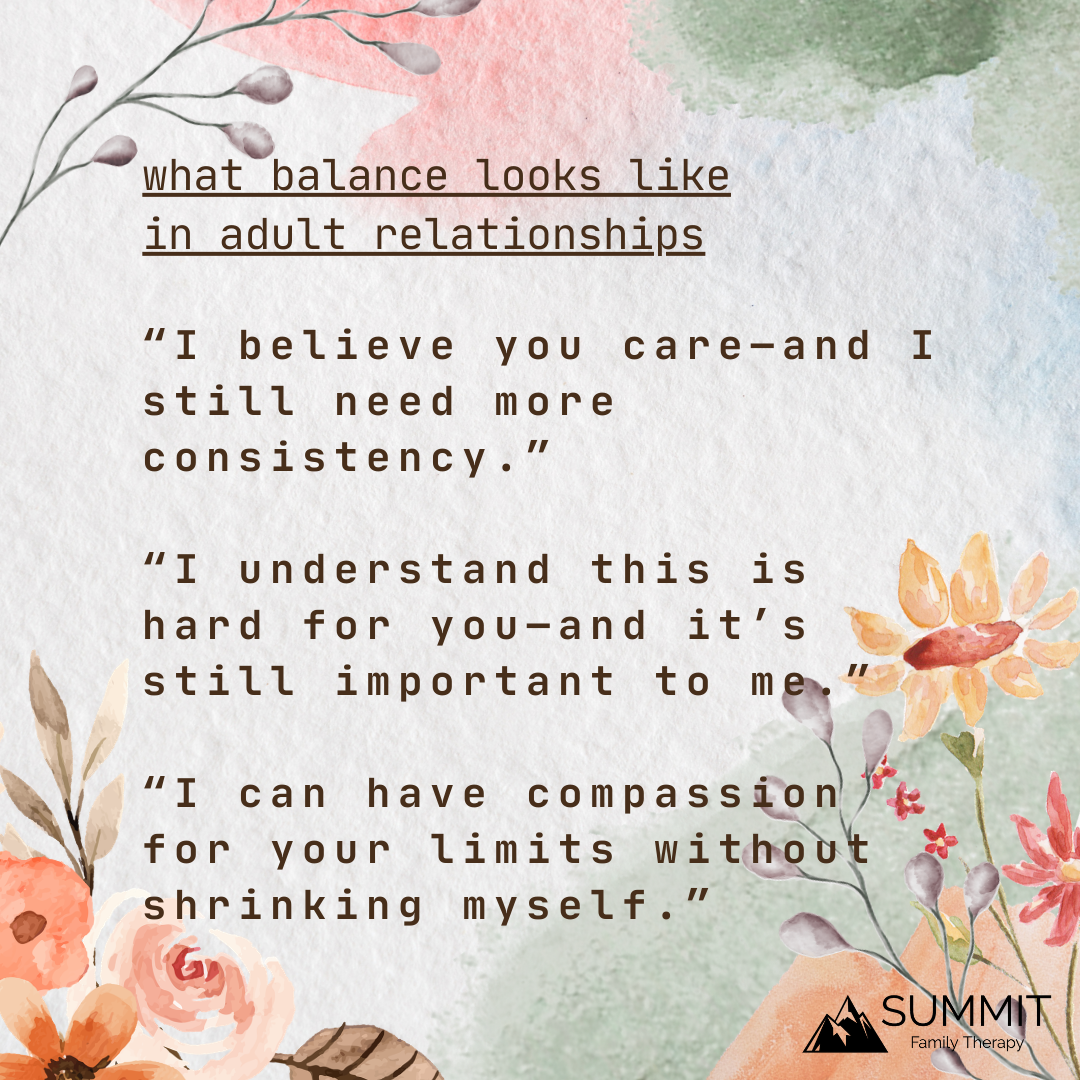
What This Looks Like in Practice
A balanced approach sounds like:
“I believe you care—and I still need more consistency.”
“I understand this is hard for you—and it’s still important to me.”
“I can have compassion for your limits without shrinking myself.”
It also means recognizing when something is a mismatch, not a moral failure.
Not every unmet need means someone is unwilling.
Not every explanation means you should stay.
Final Thoughts
Relationships are complex because people are complex.
When we cling too tightly to “if they wanted to, they would,” we risk oversimplifying human behavior and losing empathy.
When we lean too heavily on grace, we risk losing ourselves.
The healthiest relationships live in the tension—where honesty and compassion coexist, where needs are named, and where effort flows in both directions.
You are allowed to expect care.
You are allowed to offer grace.
And you are allowed to walk away when both cannot exist together.
Meet Claire Leech — Now Full‑Time at Summit Family Therapy!
We’re excited to share some great news with our Summit community — Claire Leech, LPC, is officially joining Summit Family Therapy as a full-time therapist! She has passed her LCPC exam and will have her independent license in a few weeks.
Claire has already been a wonderful part of our clinical community, and we’re thrilled to have her joining us in a full-time role. She brings a calm, compassionate presence and a genuine passion for helping people feel supported, understood, and empowered in their healing journey.
We’re excited to share some great news with our Summit community — Claire Leech, LPC, is officially joining Summit Family Therapy as a full-time therapist! She has passed her LCPC exam and will have her independent license in just a few weeks.
Claire has already been a wonderful part of our clinical community, and we’re thrilled to have her stepping into a full-time role. She brings a calm, compassionate presence and a genuine passion for helping people feel supported, understood, and empowered in their healing journey.

Get to Know Claire
Claire is a Licensed Clinical Professional Counselor with a Master’s degree in Counseling from Lincoln Christian University and a background in Psychology from Bradley University. She has experience providing outpatient counseling in both private practice and school settings, and she values ongoing learning, collaboration, and thoughtful care for every client she works with.
Her style is grounded, relational, and client-centered — she believes therapy works best when people feel safe, heard, and met right where they are. Many clients appreciate her steady presence and her ability to create a space that feels both supportive and gently challenging when growth is needed.
How Claire Supports Clients
Claire works with adults and couples, helping clients navigate life transitions, emotional challenges, relationship concerns, and personal growth. She is trained in EMDR, Gottman Method (Level I), and attachment- and trauma-informed approaches, and she integrates evidence-based practices with warmth and empathy.
Clients who are looking for a therapist who is attuned, thoughtful, and collaborative often feel especially comfortable with Claire. She takes time to understand each client’s story and works at a pace that feels respectful and empowering, rather than rushed or one-size-fits-all.
She’s also deeply committed to professional growth and collaboration, regularly participating in consultation and continuing education to ensure she’s providing high-quality, ethical care.
Why We’re So Glad She’s Here
Claire’s values align beautifully with Summit’s heart for therapy — connection, collaboration, and care that’s tailored to each individual. Her thoughtful approach and steady presence make her a great fit not only for our team, but for clients who are seeking meaningful, lasting change in a supportive environment.
If you’ve been wondering whether therapy might be a good fit for you — or if you’re looking for a therapist who offers both compassion and clinical depth — Claire may be a wonderful place to start.
Now Seeing Clients
Claire is now scheduling full-time openings beginning April 7th and is welcoming adults and couples who are looking for a supportive, encouraging space to work toward healing and meaningful change.
We’re so glad to have her on board — please help us give Claire a warm Summit welcome!
When Dementia Is Not What It First Appears: Understanding Lewy Body Dementia
Author’s Note / Trigger Warning:
The following article discusses neurodegenerative disease, cognitive decline, hallucinations, and loss of independence. This content may be difficult for some readers.
Disease is often an unseen cruelty. Cancer takes bodies. Influenza can take lives. Dementia, however, takes something different. It slowly erodes memory, identity, and recognition. Loved ones fade into unfamiliar versions of themselves. Confusion, agitation, and sorrow become constant companions—not only for the person affected, but for those who love them.
Author’s Note / Trigger Warning:
The following article discusses neurodegenerative disease, cognitive decline, hallucinations, and loss of independence. This content may be difficult for some readers.
Disease is often an unseen cruelty. Cancer takes bodies. Influenza can take lives. Dementia, however, takes something different. It slowly erodes memory, identity, and recognition. Loved ones fade into unfamiliar versions of themselves. Confusion, agitation, and sorrow become constant companions—not only for the person affected, but for those who love them.
Among the many forms of dementia, Lewy Body Dementia (LBD) is particularly devastating and frequently misunderstood.
According to the Lewy Body Dementia Association, LBD affects an estimated 1.3–1.4 million people in the United States, making it the second most common form of degenerative dementia after Alzheimer’s disease. Yet despite its prevalence, it is often misdiagnosed or recognized too late.

What Is Lewy Body Dementia?
Lewy Body Dementia is caused by the accumulation of abnormal protein deposits—Lewy bodies—inside brain cells. These deposits disrupt communication between neurons and affect multiple systems simultaneously, including:
Thinking and attention
Memory
Movement (parkinsonian symptoms)
Sleep
Behavior and perception
Because LBD impacts both cognitive and motor systems, it often overlaps clinically with Alzheimer’s disease and Parkinson’s disease, contributing to frequent misdiagnosis.
Common symptoms include fluctuating cognition, visual hallucinations, REM sleep behavior disorder, spontaneous parkinsonism, repeated falls, and pronounced sensitivity to certain medications—particularly antipsychotics.
A Case Illustration: Jim
Jim was a 68‑year‑old semi‑retired university professor. He was intelligent, quirky, and socially engaging. Over time, subtle changes began to appear.
He became increasingly prone to falls at home. Because Jim occasionally drank alcohol, these incidents were initially dismissed. His wife later discovered impulsive spending on multiple streaming services he could not recall signing up for. He developed unusual nervous movements consistent with parkinsonian symptoms. His speech, once hyperlexic and articulate, became disorganized. His body language no longer matched his words. His posture and gait changed.
Eventually, Jim became hostile, paranoid, and erratic. He reported seeing “angels” and speaking with his deceased brother. At first, clinicians suspected alcohol‑induced psychosis or a primary psychiatric disorder.
It was not until a hospital admission and neurological evaluation that the words “Lewy Body Dementia” were spoken—words that irrevocably altered his wife’s life.
Why Accurate Diagnosis Matters
Lewy Body Dementia is frequently misdiagnosed as Alzheimer’s disease, Parkinson’s disease, or late‑life psychosis. Studies suggest that nearly 80% of individuals with LBD receive an initial incorrect diagnosis, often after years of symptoms.
This misdiagnosis is not benign.
People with LBD are exquisitely sensitive to antipsychotic medications, particularly first‑generation agents such as haloperidol (Haldol). Up to 50% of individuals with LBD may experience severe neuroleptic sensitivity reactions, including rapid cognitive decline, profound sedation, worsening parkinsonism, and potentially fatal neuroleptic malignant syndrome.
In Jim’s case, the administration of haloperidol dramatically worsened his condition—ironically confirming the diagnosis of LBD.
Due to the severity of his symptoms, Jim was unable to return home and now resides in a memory care facility within driving distance of his family.
When Memory Care Is Not Yet Required
Not everyone with Lewy Body Dementia requires immediate placement in memory care. Some individuals retain partial independence and can remain at home with appropriate supports.
Helpful strategies include:
Avoiding over‑the‑counter sleep aids and anticholinergic medications that impair cognition
Reducing clutter and establishing predictable routines for activities of daily living
Minimizing environmental noise and distractions
Avoiding “quizzing” or testing memory
Creating financial safeguards to prevent impulsive spending
Using calm, clear, and non‑judgmental communication
Support should be adaptive, respectful, and grounded in safety rather than correction.
If You Suspect Lewy Body Dementia
Early recognition can reduce harm and improve quality of life. If you suspect LBD, consult with a neurologist or healthcare provider familiar with this condition.
The Lewy Body Dementia Association provides a comprehensive symptom checklist for patients, caregivers, and clinicians:
👉 Lewy Body Dementia Symptom Checklist (PDF)
Final Thoughts
Lewy Body Dementia is not merely a memory disorder—it is a complex, systemic neurodegenerative disease that demands awareness, accurate diagnosis, and compassionate care. For caregivers and families, the journey is often isolating and overwhelming. For patients, the experience can be terrifying.
Knowledge does not erase grief—but it can prevent unnecessary suffering.
References
Lewy Body Dementia Association. (2023). Diagnosing Lewy body dementia is tricky but vital.
BMJ Best Practice. (2025). Dementia with Lewy bodies: Symptoms, diagnosis and treatment.
Lewy Body Dementia Association. (2026). LBD medical alert wallet card and medication warnings.
Dementia Trainer. (2025). Sensitivity to antipsychotic medications in Lewy body dementia.
Frontiers in Psychiatry. (2025). Case report: Lewy body dementia with antipsychotic sensitivity.